 Skip to content
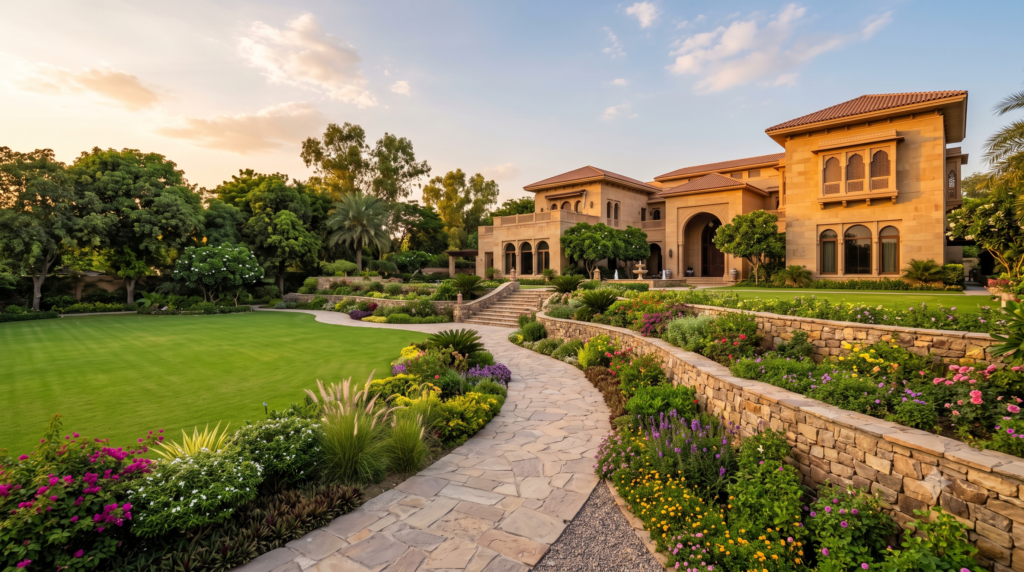
What Is Landscaping? A Field-Based Definition, Process, and Guide
Summary: Landscaping is the deliberate engineering and design of outdoor land combining grading, drainage, hardscape structures, and living plant systems to make a property functional, durable, and visually cohesive. It is a technical process, not just planting, and requires site-specific decisions about soil, climate, and water flow before a single tree goes in the ground.
Why This Definition Actually Matters
If you have searched “what is landscaping,” you have probably already scrolled past five articles that define it as “the art of arranging plants and features to beautify outdoor space.” That definition is not wrong it is just dangerously incomplete.
At Design & Concept Studio, we have spent 13 years executing landscape projects across DHA City Karachi, DHA Gujranwala, Bahria Town, and private estates nationwide. What is landscaping, in practice? It is a discipline that starts underground with soil composition and water drainage long before it becomes a discipline of aesthetics above ground.
This distinction is not academic. Homeowners who treat landscaping as decoration end up with waterlogged lawns after the first monsoon, cracked pathways from poor sub-base compaction, and dead plant beds because nobody accounted for Karachi’s saline groundwater table. This guide gives you the real, technically grounded definition and the process behind it.
The Real Definition of Landscaping
Summary: Landscaping is the combined process of engineering the land (grading, drainage, structural hardscape) and designing its living systems (plants, lawns, trees) to create a functional, sustainable outdoor environment. It sits at the intersection of civil engineering, horticulture, and design.
Landscaping is not one activity it is a layered discipline made up of two core categories that must work together.
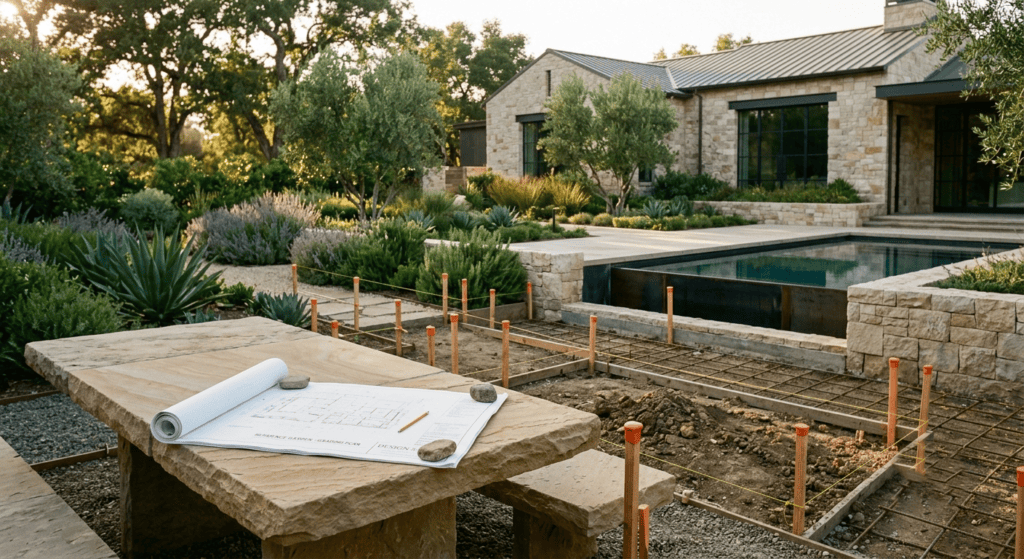
- Hardscape: The non-living, structural elements retaining walls, pathways, driveways, drainage channels, patios, pergolas, and water features. This is engineering work, governed by load calculations, soil bearing capacity, and slope management.
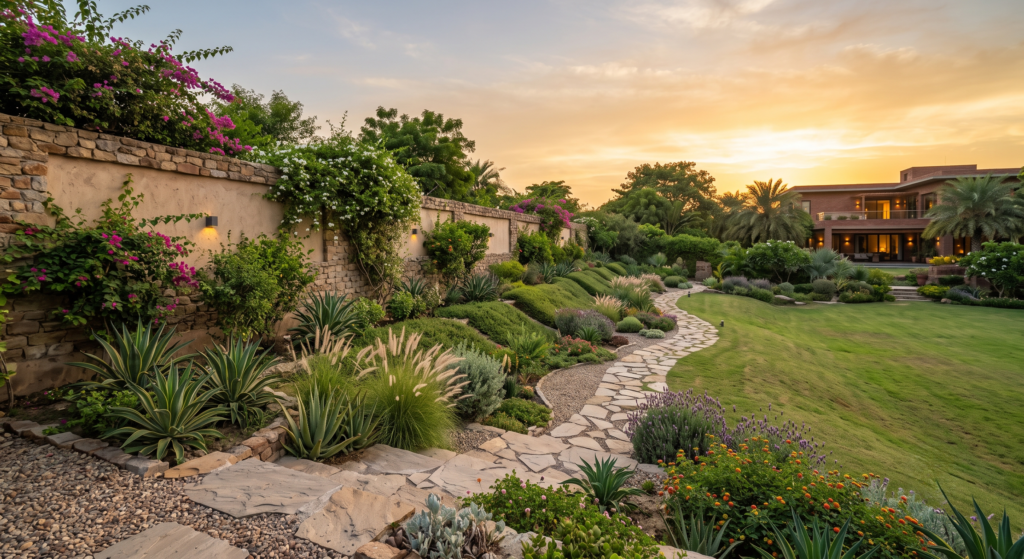
- Softscape: The living elements lawns, trees, shrubs, seasonal plant beds, and vertical greenery. This is horticulture work, governed by climate zone, soil pH, and water requirements.
💡 Our Experience: On nearly every estate-sized project we have executed in DHA City Karachi, clients initially approach us wanting softscape only “just make it look nice.” Within the first site visit, we almost always identify a grading or drainage issue that has to be corrected first, or the plants and lawn installed on top of it will fail within one monsoon season.
What Landscaping Actually Includes (Beyond Plants)
Summary: A complete landscaping scope includes site grading, drainage engineering, hardscape construction, softscape installation, irrigation systems, and long-term maintenance planning. Skipping any one of these layers is the single most common cause of landscape failure in Pakistani residential and estate properties.
1. Site Assessment and Soil Analysis
Before any design work, the land itself has to be understood soil type, compaction level, natural slope, and water table depth. In coastal cities like Karachi, high salinity and clay-heavy soil dramatically limit which plant species will actually survive.
2. Grading and Drainage Engineering
This is the step most competitor content skips entirely. Correct grading directs rainwater away from foundations and toward proper outlets; incorrect grading causes standing water, erosion, and structural seepage.
⚠️ Common Client Mistake: Homeowners frequently hire a gardener to “landscape” a newly handed-over plot in DHA or Bahria Town without any grading assessment. The lawn looks fine for the first dry season then the first heavy monsoon reveals the plot was never properly sloped, and water pools against the boundary wall or house foundation.
3. Hardscape Construction
Retaining walls, walkways, driveways, seating structures, and water features. These require structural calculations not just material selection particularly on sloped estate plots.
4. Softscape and Planting Design
Lawn type selection, tree placement (for both aesthetics and future root-system clearance from boundary walls and utility lines), shrub layering, and seasonal color planning.
5. Irrigation System Design
Drip irrigation, sprinkler zoning, and water-source planning critical in a country facing increasing water scarcity, and a line item most DIY or informal landscaping attempts leave out completely.
6. Maintenance Planning
Landscaping is not a one-time install. Lawn health, pruning cycles, seasonal replanting, and irrigation servicing all need a maintenance framework from day one.
⚙️ What We Learned in the Field: Every retaining wall or drainage channel we have installed across our DHA and Bahria Town projects has to account for Pakistan’s monsoon load specifically a generic “landscaping” approach borrowed from drier climates simply does not hold up structurally over multiple rainy seasons.
Types of Landscaping
Summary: Landscaping is generally categorized by property type and function residential, commercial, estate/master-planned, and waterscape/park design each requiring different structural and horticultural approaches. The scale and regulatory context (DHA/Bahria Town bylaws) changes significantly between categories.
| Type | Primary Focus | Typical Scope |
|---|---|---|
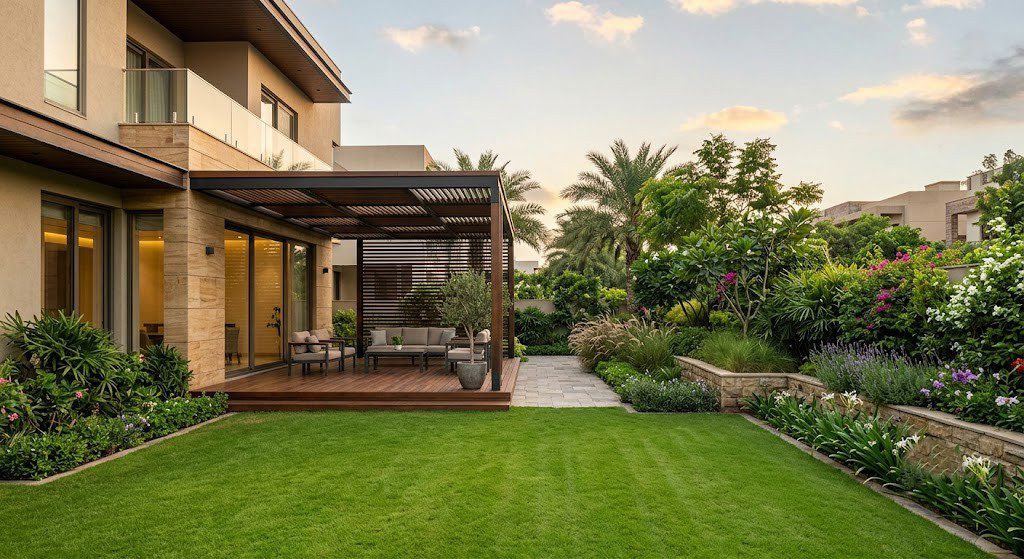
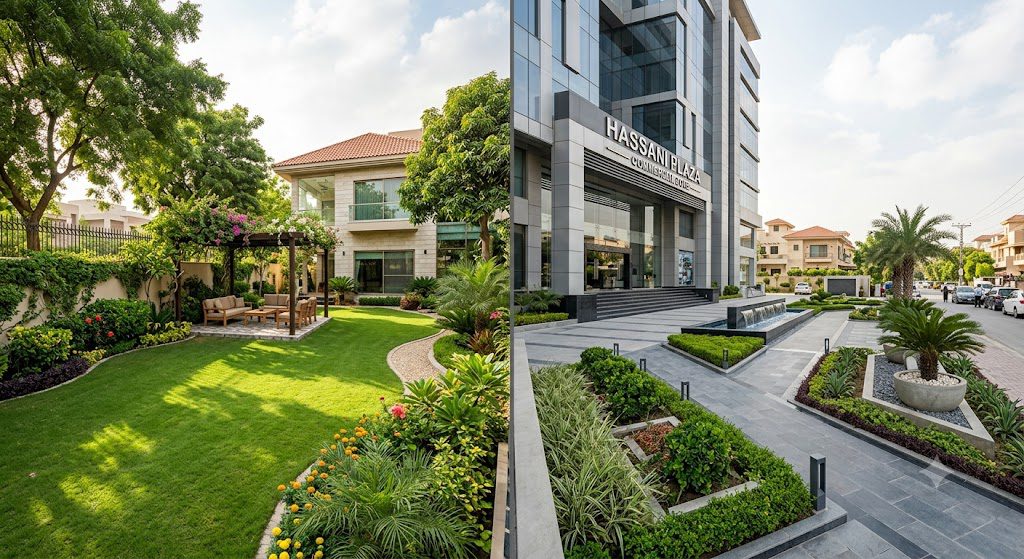
| Residential Landscaping | Home curb appeal, backyard functionality | Lawns, planting beds, small hardscape, boundary greenery |
| Estate & Farmhouse Landscaping | Large-plot master planning | Grading, drainage networks, multiple hardscape zones, statement softscape |
| Commercial Landscaping | Corporate/public property presentation | Entry plazas, structured plant beds, low-maintenance systems |
| Waterscape Architecture | Ponds, fountains, water features | Hydraulic engineering, filtration, structural waterproofing |
| Parks & Public Landscaping | Community and recreational space | Durable hardscape, native/climate-resilient softscape, high-traffic planning |
🛠️ Professional Tip: If your project is larger than a standard residential plot an estate, farmhouse, or DHA corner plot with irregular grading treat it as a master-planning project from day one, not a “landscaping” add-on after construction. Retrofitting drainage and grading after hardscape is poured is significantly more expensive than designing it in from the start.
The Real Benefits of Landscaping
Summary: Beyond visual appeal, professionally engineered landscaping protects your property’s structural integrity, increases resale value, and reduces long-term maintenance costs by preventing drainage and soil failures. In estate developments, it is also one of the fastest ways to differentiate a property within a gated community.
- Property value: Well-executed landscaping is consistently cited as one of the highest ROI additions to estate and residential properties in gated communities.
- Structural protection: Correct grading and drainage prevent water damage to foundations, boundary walls, and driveways.
- Climate resilience: Native and climate-adapted plant selection reduces water consumption and plant mortality critical in Karachi’s arid, saline conditions.
- Reduced long-term cost: Fixing a drainage failure after the fact costs significantly more than engineering it correctly the first time.
- Curb appeal and community standing: In master-planned communities like DHA City Karachi and Bahria Town, landscaping quality is one of the most visible markers of a well-maintained property.
Landscaping vs. Gardening: Where’s the Line?
Summary: Gardening is the ongoing care of plants; landscaping is the engineered design and construction of the entire outdoor environment, including elements that have nothing to do with plants at all. A gardener maintains what a landscape architecture firm designs and builds.
A gardener waters, prunes, and replants within an existing layout. A landscape architecture firm designs the layout itself — the grading, drainage, hardscape structure, and planting plan before any ongoing maintenance begins.
⚠️ Common Client Mistake: We frequently get called in after a gardener-led “landscaping” job has failed structurally usually a drainage or slope issue the gardener was never trained to identify. At that point, the fix requires excavation and re-grading, which costs far more than if a design firm had scoped the project from the start.

Pingback: Landscaping in Lahore: Complete Guide & Design Ideas