Skip to content
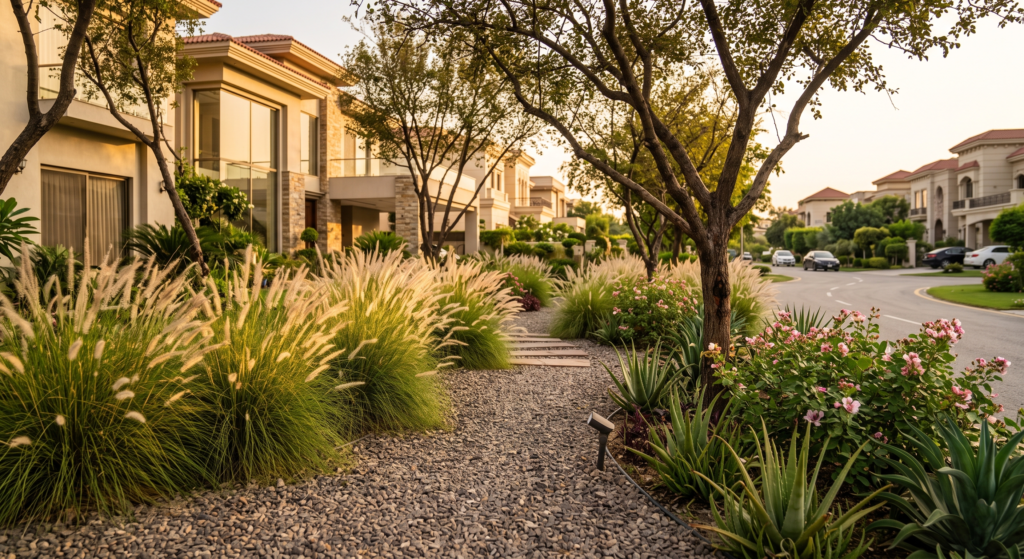
Drought Tolerant Plants Pakistan: 15 Native Species for a Low-Water Garden That Actually Survives Summer
Summary: The most reliable drought tolerant plants Pakistan gardens can depend on are native and regionally adapted species such as Jand, Ber, Neem, Kaner, Vitex, and Aloe chosen by climate zone and paired with proper root-zone engineering. Design & Concept Studio maps each species to your site’s soil, salinity, and drainage profile before planting, which is why our low-water gardens outlast generic nursery picks by years, not months.
You’re Not Wrong to Be Worried About Your Water Bill
If you’ve watched a water tanker pull into your DHA or Bahria Town driveway for the third time this month, you already know the real cost of the wrong landscape. Traditional lawns and imported ornamentals were never designed for Pakistan’s summer heat, and they punish that mismatch with dead patches, tanker bills, and repeated nursery trips.
Drought tolerant plants Pakistan homeowners actually trust are not the generic succulent lists copied from other countries’ climates. They are species proven, over 13 years of our field projects across DHA City Karachi, DHA Gujranwala, Bahria Town, and Dera Ismail Khan, to survive missed watering cycles, saline soil, and 45°C summers without collapsing.
This guide gives you a zone-mapped, field-tested plant list plus the drainage and irrigation context that determines whether these plants actually thrive on your property.
💡 Our Experience: On more than one DHA Karachi site, clients had already lost an entire ornamental hedge line before calling us the nursery had sold species suited to Lahore’s climate into a coastal, saline Karachi lot. Zone-matching isn’t optional; it’s the single biggest survival factor.
Why “Drought Tolerant” Means Something Different in Pakistan
BLUF: Drought tolerance in Pakistan isn’t just about low water it’s about surviving heat, soil salinity, and monsoon humidity swings in the same growing season. A plant that thrives in Arizona can rot here during monsoon and then scorch in May.
Pakistan spans four distinct landscaping climate zones, and each demands a different species palette:
- Coastal / Saline (Karachi, DHA City Karachi): High soil salinity, humid air, low freshwater availability.
- Semi-Arid Punjab (Lahore, DHA Gujranwala, Bahria Town Lahore/Rawalpindi): Hot dry summers, monsoon rain, alkaline clay soils.
- Arid Belt (D.I. Khan, southern KP): Extreme heat, minimal rainfall, sandy-loam soils.
- Upland / Sub-Humid (Islamabad, Murree foothills): Milder summers, better natural rainfall, but still prone to dry spells.
⚠️ Common Client Mistake: Choosing a plant because it “looked drought-tolerant” in a photo from a Middle Eastern landscaping account, without checking whether the species even survives Pakistan’s monsoon humidity. Many true desert succulents rot here in July and August.
Zone-Mapped List: 15 Drought Tolerant Plants Pakistan Gardens Rely On
BLUF: The strongest low-water plant list combines native trees for structure, hardy shrubs for mid-layer coverage, and groundcovers for erosion and heat control — matched to your specific climate zone.
Trees (Structural Canopy Layer)
| Plant (Local / Botanical Name) | Best Zone | Key Trait |
|---|---|---|
| Jand (Prosopis cineraria) | Semi-Arid Punjab, Arid Belt | Deep taproot draws moisture from far below surface |
| Ber (Ziziphus mauritiana) | All zones except cold uplands | Extremely drought resistant once established; edible fruit |
| Neem (Azadirachta indica) | Semi-Arid, Arid, Coastal | Pest-resistant, heat tolerant, dense shade |
| Sheesham (Dalbergia sissoo) | Semi-Arid Punjab, Upland | Deep-rooted, tolerates seasonal dryness once mature |
| Karir / Kirir (Capparis decidua) | Arid Belt, Semi-Arid | Near-leafless form drastically reduces water loss |
Shrubs (Mid-Layer, Screening & Color)
| Plant (Local / Botanical Name) | Best Zone | Key Trait |
|---|---|---|
| Kaner (Nerium oleander) | All zones | Reliable flowering shrub, very low irrigation needs |
| Vitex / Sambhalu (Vitex negundo) | Semi-Arid, Upland | Aromatic, pest-resistant, thrives in poor soil |
| Aak / Madar (Calotropis procera) | Arid Belt, Coastal saline sites | Tolerates highly saline, degraded soil |
| Pilu (Salvadora oleoides) | Coastal, Arid Belt | Naturally salt-tolerant native tree-shrub |
| Lantana (Lantana camara — non-invasive cultivars only) | Semi-Arid, Upland | Long flowering season, minimal irrigation |
Groundcovers, Grasses & Succulents
| Plant (Local / Botanical Name) | Best Zone | Key Trait |
|---|---|---|
| Dhaman Grass (Cenchrus ciliaris) | Arid Belt, Semi-Arid | Native forage grass, deep roots, low water lawn alternative |
| Bermuda Grass (Cynodon dactylon) | All zones | Recovers fast from dry spells; needs less water than fescue lawns |
| Aloe Vera | All zones | Water-storing leaves; near-zero irrigation once rooted |
| Agave / Century Plant | Semi-Arid, Arid Belt | Architectural accent, extremely low water demand |
| Bougainvillea | All zones | Blooms best under water stress, not despite it |
⚙️ What We Learned in the Field: Bougainvillea planted in over-irrigated beds in Bahria Town projects consistently produced fewer flowers than plants on a deliberately reduced drip schedule. Over-watering this species is the most common reason clients think it’s “underperforming.”
Coastal & Saline Sites: The Karachi/DHA City Problem
BLUF: Karachi’s soil salinity eliminates a large share of otherwise “drought-tolerant” species Pilu, Calotropis, and salt-tolerant Ziziphus varieties are the safer starting palette.
Coastal groundwater intrusion means many DHA City Karachi and coastal estate soils carry salinity levels that kill species which would otherwise survive drought easily. This is the single biggest content gap we see in competitor guides they publish one national list and ignore this constraint entirely.
⚠️ Common Client Mistake: Assuming a plant labeled “drought tolerant” is automatically “salt tolerant.” The two traits do not always overlap, and Karachi coastal sites need both.
Semi-Arid Punjab: Bahria Town & DHA Gujranwala Conditions
BLUF: Punjab’s alkaline clay soils and hot, dry summers respond best to Jand, Sheesham, Vitex, and Bermuda grass, provided drainage is engineered correctly at planting.
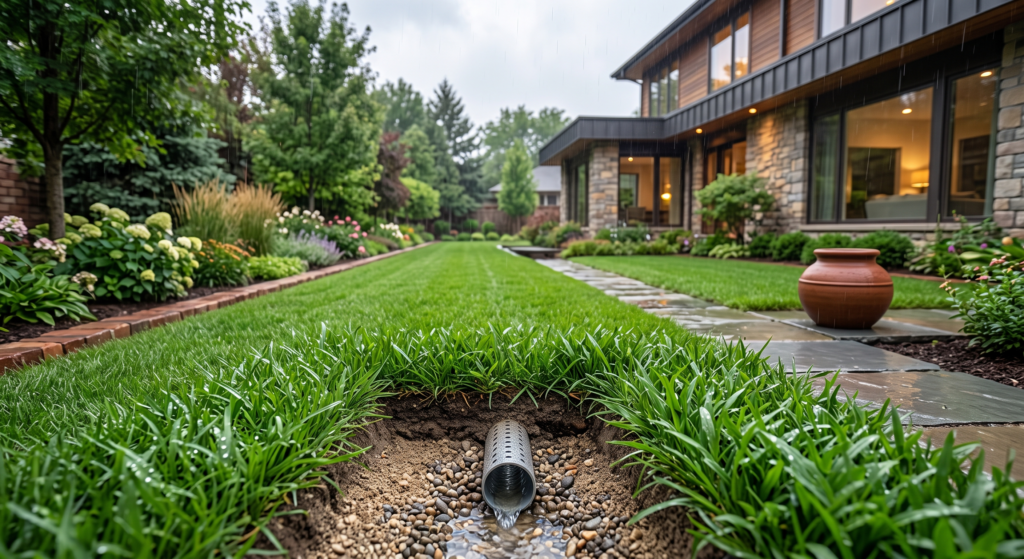
Clay-heavy soils common in Punjab estates hold water at the surface longer, then crack and dry deep down. Drought-tolerant species with deep taproots (Jand, Sheesham) are engineered by nature to reach that lower moisture but only if the planting bed isn’t compacted during construction.
Arid Belt: Dera Ismail Khan & Similar Climates
BLUF: True arid-belt projects favor Karir, Dhaman grass, and Calotropis species that evolved specifically for minimal rainfall and extreme heat.
Our HQFC Dera Ismail Khan footprint has validated this palette across multiple seasons of field observation, and it consistently outperforms imported ornamental species that were never bred for this heat range.
Establishment: Why the First 12-18 Months Determine Everything
BLUF: Even the most drought tolerant plants Pakistan offers require structured deep watering during establishment skipping this step is the top cause of “drought tolerant plant died anyway” complaints.
- Deep, infrequent watering for the first two growing seasons trains roots to grow downward instead of staying shallow.
- Drip irrigation at the root zone, not surface spraying, prevents evaporative water loss and salt buildup around the stem.
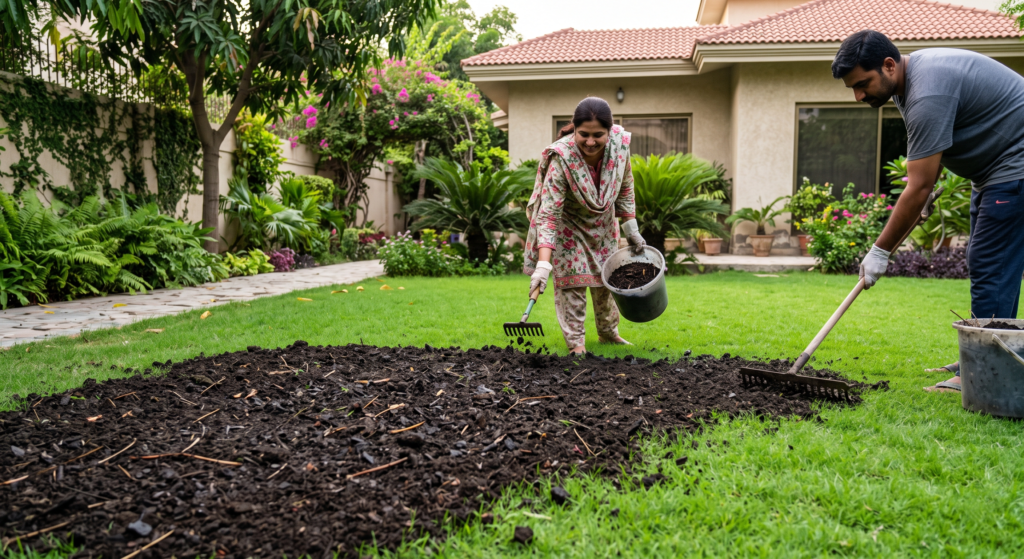
- Mulch layers of 2-3 inches reduce evapotranspiration and stabilize soil temperature around new roots.
🛠️ Professional Tip: Water new plantings deeply twice a week for the first month, then taper to once weekly through month six. Frequent shallow watering trains roots to stay near the surface which defeats the entire purpose of choosing a drought-tolerant species.
Cost Comparison: Native Xeriscape Bed vs. Traditional Lawn
BLUF: A properly designed native/drought-tolerant bed typically cuts irrigation water use by roughly 50-70% compared to a traditional lawn of the same footprint, once establishment is complete.
| Factor | Traditional Lawn | Native Xeriscape Bed |
|---|---|---|
| Weekly irrigation need | High, near-daily in summer | Low, 1-2x weekly post-establishment |
| Tanker dependency (dry months) | Frequent | Rare to none |
| Replacement rate (poor seasons) | High | Low, once established |
| Design flexibility | Limited to turf | Layered trees, shrubs, groundcover |
| Long-term maintenance labor | High (mowing, feeding) | Low (pruning, seasonal check-ins) |
Debunking the Three Biggest Myths
BLUF: Cactus-only thinking, blind trust in Conocarpus, and expecting zero maintenance forever are the three myths most responsible for failed low-water gardens in Pakistan.
- Myth 1 “Only cacti and succulents work”: Most desert succulents struggle with Pakistan’s monsoon humidity and rot at the root crown. Native trees and shrubs outperform them in real conditions.
- Myth 2 “Conocarpus is a safe, easy shade tree”: Several city authorities have restricted Conocarpus over invasive root systems damaging pipes and pavement, plus community pollen complaints. We do not include it in our recommended palette.
- Myth 3 “Drought tolerant means no maintenance, ever”: Every plant on this list still needs a structured establishment period, seasonal pruning, and occasional deep watering during extreme heat waves.
How Design & Concept Studio Engineers a Low-Water Garden
BLUF: We don’t just select drought-tolerant plants we engineer the soil, grading, and irrigation system around them, which is why our low-water landscapes across DHA, Bahria Town, and Dera Ismail Khan hold up season after season.
Our process starts with a site-specific soil and salinity assessment, moves into grading and drainage engineering, and only then reaches plant selection and drip-irrigation design. This sequence not the plant list alone is what separates a landscape that survives from one that needs replanting every year.
If you’re planning a new garden, a renovation, or a full estate master plan, our team can walk your site, assess soil and drainage conditions, and build a zone-matched planting plan built to your property specifically.