Skip to content
Monsoon Lawn Care Pakistan: The Complete Maintenance Schedule
Summary: Monsoon lawn care in Pakistan requires a structured before, during, and after schedule pre-monsoon drainage and mowing prep, reduced fertilizing and disease monitoring during heavy rain, and aeration and weed control once the season passes. Skipping any phase is why so many lawns develop waterlogging, fungal patches, or weed overgrowth every rainy season.
Monsoon Doesn’t Mean “No Maintenance Needed”
There’s a common assumption that monsoon season means your lawn takes care of itself rain does the watering, so maintenance can pause. In practice, monsoon lawn care in Pakistan actually requires more deliberate attention, not less.
Standing water, fungal disease, weed explosions, and turf damage are all monsoon-specific risks that don’t resolve on their own. This guide gives you a structured monsoon lawn care schedule for Pakistan what to do before the rains start, how to manage your lawn during sustained wet weather, and how to recover it once the season passes.
Before Monsoon: Preparation Is Your Best Defense
Summary: Pre-monsoon lawn preparation confirming drainage, mowing correctly, and clearing debris does more to prevent waterlogging and disease than anything you can do once heavy rain has already started. This is the single highest-leverage phase of monsoon lawn care in Pakistan.
- Confirm your drainage is working — walk your lawn during a test watering or light rain and check for pooling; this is the same diagnostic approach covered in our lawn drainage guide.
- Mow to a slightly shorter height — going into monsoon season with grass a bit shorter than usual reduces the risk of matting and fungal growth under wet, dense foliage.
- Clear drainage channels and low points of debris, leaves, and buildup before the first heavy rains arrive.
- Aerate compacted areas if you haven’t already — compacted soil is far more prone to waterlogging once monsoon rains begin.
⚠️ Common Client Mistake: Homeowners frequently wait until they see standing water to address drainage, rather than checking it proactively before monsoon season starts. By the time pooling is visible, you’re already managing an active problem instead of preventing one.
During Monsoon: Managing Active Wet Conditions
Summary: During sustained monsoon rain, lawn care shifts toward disease monitoring, adjusted mowing frequency, and reduced fertilizer application, since standard warm-weather routines can actually worsen fungal risk in prolonged wet conditions. The goal during this phase is minimizing additional stress on already-saturated turf.
Mowing During Wet Weather
Mow when the grass is dry if possible, and avoid mowing very short during monsoon cutting too low on wet, stressed turf increases vulnerability to fungal disease. Reduce mowing frequency slightly if consistent rain prevents proper drying between cuts.
Watch for Fungal Disease
Sustained moisture creates ideal conditions for fungal patches, often appearing as discolored or thinning circular areas. Catching this early and improving airflow and drainage to the affected area is far more effective than treating it after it’s spread.
💡 Our Experience: On lawn maintenance programs across DHA and Bahria Town developments, the properties with the fewest monsoon-season fungal issues are consistently the ones where drainage was addressed proactively before the season, not the ones with the most aggressive fungicide treatment during it.
Adjust Fertilizer Timing
Reduce or pause standard fertilizer application during periods of heavy, sustained rain excess moisture combined with fertilizer can encourage fungal growth rather than healthy turf recovery. Resume normal fertilizing once rainfall becomes less constant.
Monitor Standing Water Daily
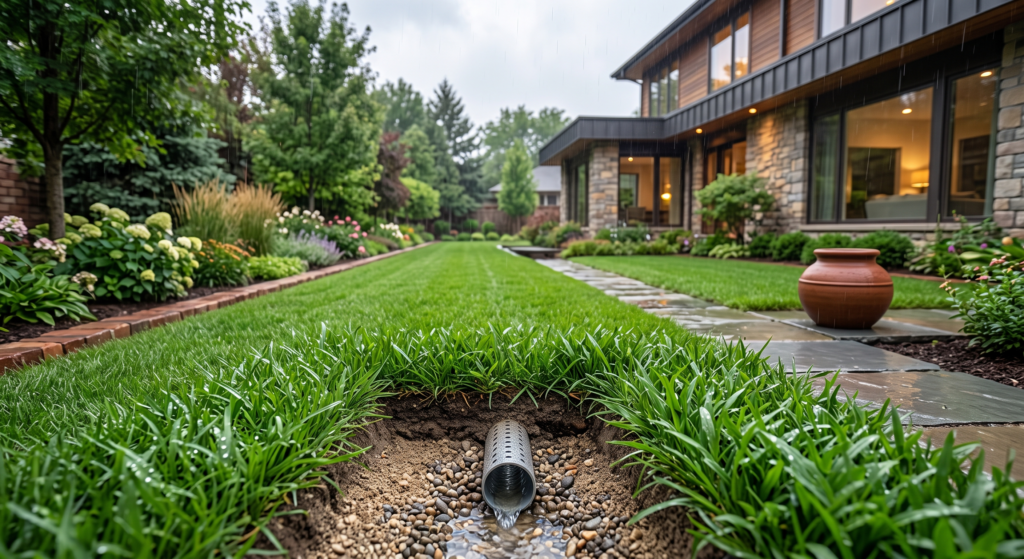
Water that clears within a few hours after rain is generally fine. Water that lingers for a day or more during active monsoon weeks needs the same diagnostic approach covered in our lawn drainage guide don’t assume it will resolve once the rain stops.
⚙️ What We Learned in the Field: We’ve found that lawns mowed at a consistent, moderate height through monsoon season rather than left to grow long during rain and then cut aggressively once it clears recover noticeably faster and show less fungal patching than lawns subjected to that stop-start mowing pattern.
After Monsoon: Recovery and Reset
Summary: Post-monsoon lawn care focuses on aeration, weed control, and reassessing any drainage or turf damage that occurred during the season this is also the ideal window to address any compaction or waterlogging issues identified while the season’s problems are still fresh. Treating this phase as a genuine reset, not just a return to normal mowing, sets up healthier turf for the next season.
- Aerate compacted areas — monsoon rain often re-compacts soil in high-traffic or poorly draining zones, making post-season aeration valuable even if you aerated beforehand.
- Address weed growth — monsoon conditions frequently trigger rapid weed growth; post-season is the right window for weed control before growth becomes established.
- Reassess any turf damage or fungal patches — overseed or reseed affected areas once conditions dry out, rather than waiting for them to recover on their own.
- Revisit drainage performance — if you identified pooling problems during monsoon, post-season (dry conditions) is the right time to correct grading or install subsurface drainage, covered in depth in our lawn drainage guide.
🛠️ Professional Tip: Keep a simple note of exactly where and how badly water pooled during monsoon season while it’s fresh in your memory this information is far more useful for planning a drainage fix in the dry season than trying to recall it months later.
A Sample Monsoon Lawn Care Schedule
Summary: A structured, phase-based schedule makes monsoon lawn care in Pakistan far more manageable than reacting to problems as they appear. Use this as a general framework and adjust timing based on your specific region’s monsoon pattern.
| Phase | Key Actions |
|---|---|
| 4–6 Weeks Before Monsoon | Confirm drainage function, aerate compacted areas, clear drainage channels |
| 1–2 Weeks Before Monsoon | Mow to a slightly shorter height, final debris clearance |
| During Monsoon | Monitor for standing water and fungal patches, adjust mowing and fertilizer timing |
| 2–4 Weeks After Monsoon | Aerate, control weeds, overseed damaged areas, reassess drainage performance |