Spanish Olive Tree Care Pakistan: A Complete Guide for Imported Olea Europaea Specimens
Summary: Proper Spanish olive tree care Pakistan gardens require centers on sharp soil drainage, controlled deep watering, and a structured transplant-shock recovery period not the frequent watering routine most ornamental plants need. Design & Concept Studio manages imported olive tree installation and aftercare across Punjab, Karachi, and upland climate zones to protect this high-value investment through establishment.
Your Imported Olive Tree Isn’t Dying It’s Adjusting
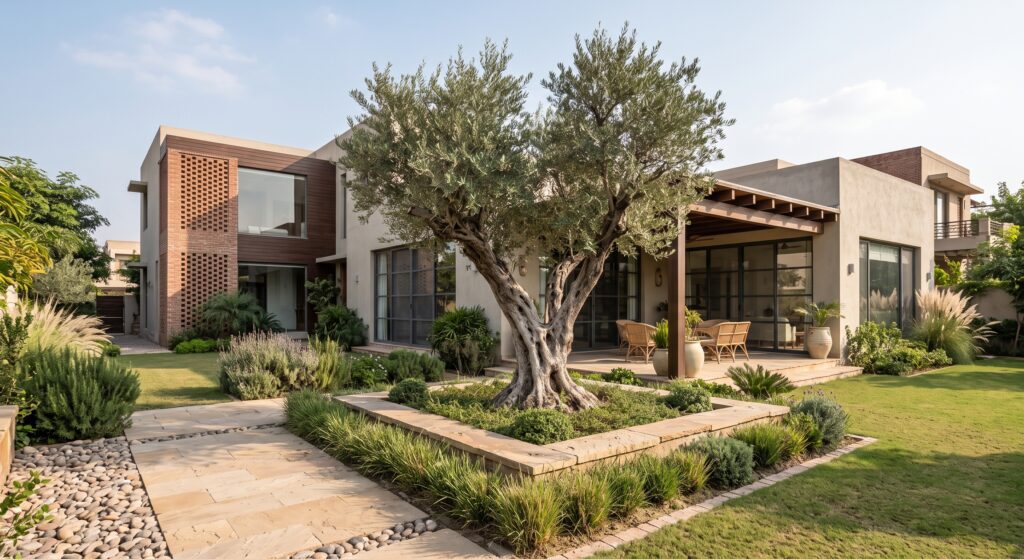
If your recently planted Spanish olive tree is dropping leaves or looking stressed, the panic is understandable these are expensive, imported specimens, and every browning leaf feels like a loss.
In most cases, that reaction is transplant shock, not tree failure. Spanish olive tree care Pakistan conditions demand is fundamentally different from the Mediterranean environment the tree shipped from, and the adjustment period is normal when root care is handled correctly.
With 13 years of field experience across DHA City Karachi, DHA Gujranwala, Bahria Town, and private estates nationwide, we’ve managed imported specimen tree installations through exactly this adjustment window, and we know which symptoms are normal and which signal a real problem.
💡 Our Experience: On a Bahria Town project, an imported olive tree dropped nearly a third of its leaves within the first month. Root inspection showed healthy white root growth beneath the surface the leaf drop was the tree redirecting energy to root establishment, not a sign of failure.
Why Olea Europaea Struggles in Standard Pakistani Garden Soil
BLUF: Olive trees evolved in free-draining, rocky Mediterranean soil, which makes Pakistan’s common clay-heavy, poorly drained garden soil the single biggest threat to a newly planted specimen.
- Drainage requirement: Olive roots need oxygen access; standing water around the root zone causes root rot within weeks, not months.
- Soil pH: Olives prefer slightly alkaline soil in the 6.5-8.5 range, which fortunately matches much of Pakistan’s naturally alkaline soil profile.
- Soil structure: Heavy clay compacts around the root ball and traps moisture amending with coarse sand or grit before planting is often necessary.
⚠️ Common Client Mistake: Planting an imported olive tree directly into unamended clay soil because “the soil looks fine on the surface,” without checking subsurface drainage. Water pooling below the visible soil line is invisible until root damage has already started.
Watering: The Most Common Way Olive Trees Are Killed in Pakistan
BLUF: Overwatering, not underwatering, is the leading cause of imported olive tree failure in Pakistani gardens, because owners default to ornamental-plant watering habits instead of the deep, infrequent schedule olives actually need.
- Establishment period (first 6-12 months): Deep watering every 7-10 days, allowing the top few inches of soil to dry out between waterings.
- Post-establishment: Mature olive trees tolerate extended dry periods and often need watering only during extreme heat stretches.
- Signs of overwatering: Yellowing leaves, soft or blackened root tissue near the base, and a sour smell in the soil.
⚙️ What We Learned in the Field: Nearly every “dying olive tree” call we’ve received traced back to a watering schedule copied from lawn or hedge irrigation timers, running far more frequently than an olive tree’s root system can tolerate.
Sunlight and Temperature: Matching Pakistan’s Zones to Mediterranean Needs
BLUF: Olive trees need full sun and tolerate Pakistan’s summer heat well, but winter temperature swings in upland areas and unexpected frost pockets require protective planning for young trees.
| Region | Sunlight Fit | Winter Risk | Care Adjustment |
|---|---|---|---|
| Punjab (Lahore, Gujranwala) | Excellent, full sun available | Moderate occasional cold snaps | Young tree frost protection in winter |
| Karachi & Coastal | Excellent, but high humidity | Low | Extra drainage focus due to humidity |
| Islamabad & Upland | Good, watch for shorter winter days | Higher frost risk | Frost cloth for young specimens |
🛠️ Professional Tip: Wrap young, recently transplanted olive trees with breathable frost cloth during unexpected cold snaps in their first two winters. Mature, established trees handle Pakistan’s winter range without extra protection.
Transplant Shock Recovery: What’s Normal and What Isn’t
BLUF: Moderate leaf drop, some leaf curling, and slowed growth are normal transplant shock responses in the first few months, while blackened root tissue, trunk softness, or total leaf loss signal a genuine problem.
- Normal: Leaf yellowing and drop concentrated on older, inner leaves while new growth remains healthy.
- Normal: Slowed but present new growth within 8-12 weeks of planting.
- Concerning: Soft, dark trunk tissue at the soil line, or a complete stop in any new growth after several months.
⚠️ Common Client Mistake: Responding to transplant shock leaf drop by increasing watering frequency, which often worsens root stress instead of helping the tree recover.
Fertilization and Micronutrients: Correcting Pakistani Soil Deficiencies
BLUF: Pakistani alkaline soils commonly lack available iron and zinc, which can cause chlorosis (yellowing between leaf veins) in olive trees even when overall soil fertility is adequate.
- Nitrogen: Applied in moderate, split doses during the growing season excess nitrogen promotes leafy growth at the expense of root establishment.
- Iron and zinc chelates: Often necessary as a foliar or soil-applied supplement in high-pH Pakistani soils to prevent chlorosis.
- Timing: Avoid heavy fertilization during the first few months after transplanting, when the tree’s priority is root recovery, not top growth.
🛠️ Professional Tip: A soil test before fertilizing tells you exactly which micronutrients your specific site is missing guessing with a generic “tree fertilizer” often skips the iron and zinc correction Pakistani olive trees actually need.
Pruning and Long-Term Maintenance
BLUF: Olive trees benefit from structural pruning in their first few years to establish an open canopy shape, followed by lighter maintenance pruning once mature.
- Formative pruning (years 1-3): Establishes an open center that allows light and air circulation through the canopy.
- Maintenance pruning (mature trees): Removes dead, crossing, or suckering growth, typically once a year after the growing season.
- Fruit production consideration: If fruit is a goal, pruning should preserve enough of the previous season’s growth, since olives fruit on wood from the prior year.
Pest Management for Olive Trees in a Pakistani Climate
BLUF: Olive trees are relatively pest-resistant compared to many ornamental species, but scale insects and root-zone fungal issues from waterlogged soil are the most common problems seen locally.
- Scale insects: Monitor stems and leaf undersides; early treatment prevents larger infestations.
- Root rot fungi: Almost always linked back to drainage problems rather than a primary pest issue correcting soil drainage is the real fix.
- Regular inspection: Especially important during the first two years while the tree’s natural resistance is still establishing alongside its root system.
Container-Grown vs. Field-Planted Imported Specimens
BLUF: Container-grown olive trees generally transplant with less shock than bare-root or field-dug specimens, because their root system stays intact through shipping and planting.
- Container-grown: Lower transplant shock risk, more forgiving planting window.
- Root-ball / field-dug imports: Higher shock risk, require more careful root inspection and a stricter establishment watering schedule.
⚙️ What We Learned in the Field: Root-ball imported specimens consistently need a longer, more conservative watering ramp-up than container-grown trees of the same size treating them identically is a common cause of avoidable stress.
How Design & Concept Studio Supports Imported Specimen Trees
BLUF: We manage imported olive tree installation as a specialized process soil preparation, drainage engineering, and a structured aftercare schedule protecting what is often a significant plant investment through its critical first two years.
Our approach starts with soil and drainage assessment before the tree ever arrives on site, continues through a controlled establishment watering and fertilization schedule, and includes ongoing monitoring through the transplant shock recovery period.
If you’ve imported a Spanish olive tree or are planning to include specimen trees in a new garden design, our team can assess your site conditions and build a care plan matched to your specific soil and climate zone.