Plant Import Quarantine Rules Pakistan Requires You to Follow Before Ordering Flora
Summary: The plant import quarantine rules Pakistan enforces require a valid Import Permit from the Department of Plant Protection (DPP) obtained before shipment, a Phytosanitary Certificate from the exporting country, and a Plant Protection Release Order after inspection at the port of entry. Skipping any step in this sequence risks having your shipment fumigated, delayed, destroyed, or returned at your cost.
Why This Isn’t Just Paperwork It’s a Sequence
Plant import problems in Pakistan almost always trace back to one thing: the paperwork sequence was done in the wrong order. A Phytosanitary Certificate obtained before an Import Permit is essentially meaningless, because the Import Permit is what sets the conditions the exporting country’s certificate needs to satisfy.
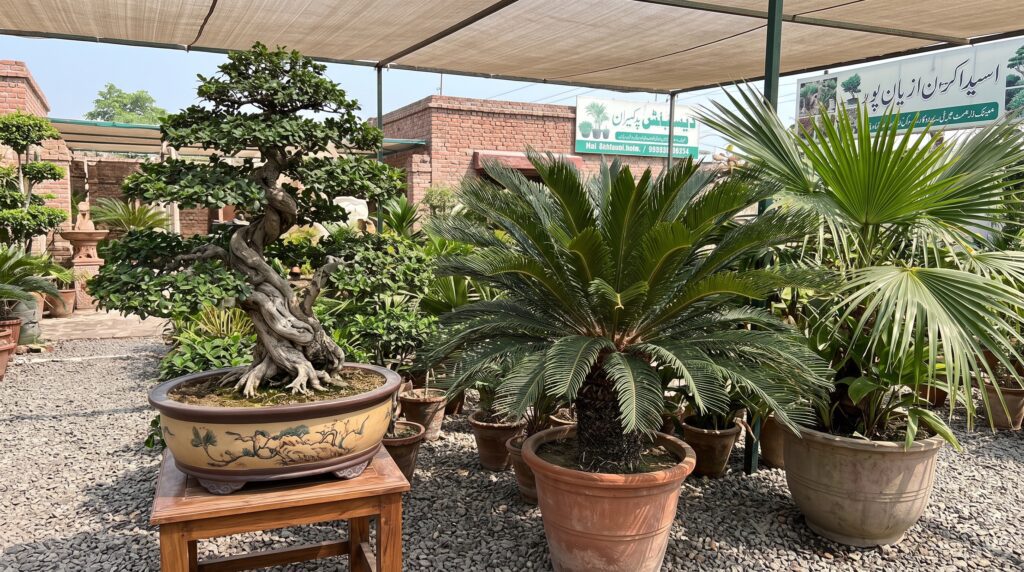
Understanding plant import quarantine rules Pakistan enforces means understanding this sequence, not just knowing that documents are required. Get the order wrong, and a shipment of imported bonsai, cycads, or specimen trees can sit at the port facing fumigation, delay, or outright destruction.
With 13 years of sourcing imported specimen plants for landscape projects across Pakistan, we’ve coordinated this process directly and know exactly where importers most often lose time and money.
💡 Our Experience: We’ve seen clients arrange an exporter’s Phytosanitary Certificate first, assuming it was the primary document needed, only to discover Pakistan’s Import Permit which must be secured before export hadn’t been applied for at all. That shipment sat at the exporting country’s port for weeks.
The Legal Framework: Which Law Actually Governs This
BLUF: Plant imports into Pakistan are primarily governed by the Pakistan Plant Quarantine Act, 1976, enforced by the Department of Plant Protection (DPP) under the Ministry of National Food Security & Research, with additional CITES-related obligations for certain rare species under the Pakistan Trade Control of Wild Fauna and Flora Act, 2012.
- Pakistan Plant Quarantine Act, 1976: The core legislation governing import, export, and quarantine of plants and plant material.
- Department of Plant Protection (DPP): Pakistan’s National Plant Protection Organization (NPPO) under the International Plant Protection Convention (IPPC), which Pakistan has been a signatory to since 1954.
- Pakistan Trade Control of Wild Fauna and Flora Act, 2012: Governs CITES-listed species, relevant to certain rare cycads, orchids, and other protected flora.
⚠️ Common Client Mistake: Assuming all imported ornamental plants fall under the same set of rules. CITES-listed species carry a separate legal obligation on top of standard DPP phytosanitary requirements.
The Correct Sequence: Pest Risk Analysis to Release Order
BLUF: Plant imports follow a specific four-stage sequence Pest Risk Analysis, Import Permit, Phytosanitary Certificate, and Release Order and each stage depends on the one before it being completed correctly.
- Pest Risk Analysis (PRA): The DPP assesses the phytosanitary risk of a specific commodity from a specific country of origin, working out any required treatment or management conditions.
- Import Permit: Based on the PRA outcome, the DPP issues an Import Permit a commodity- and country-specific document that must be obtained before the shipment departs the country of origin.
- Phytosanitary Certificate: The exporting country’s plant protection authority issues this certificate, confirming the shipment meets the conditions specified in Pakistan’s Import Permit.
- Plant Protection Release Order (PPRO): On arrival at the Pakistani port of entry, DPP Plant Quarantine Inspectors inspect the consignment and, if satisfactory, issue a Release Order notifying Customs to release the shipment.
⚙️ What We Learned in the Field: The Import Permit has a limited validity period a maximum of three months meaning the exporting country must ship the commodity within that window. Ordering plants without confirming this timeline against the nursery’s actual shipping schedule is a common, avoidable delay.
What Happens at the Port of Entry
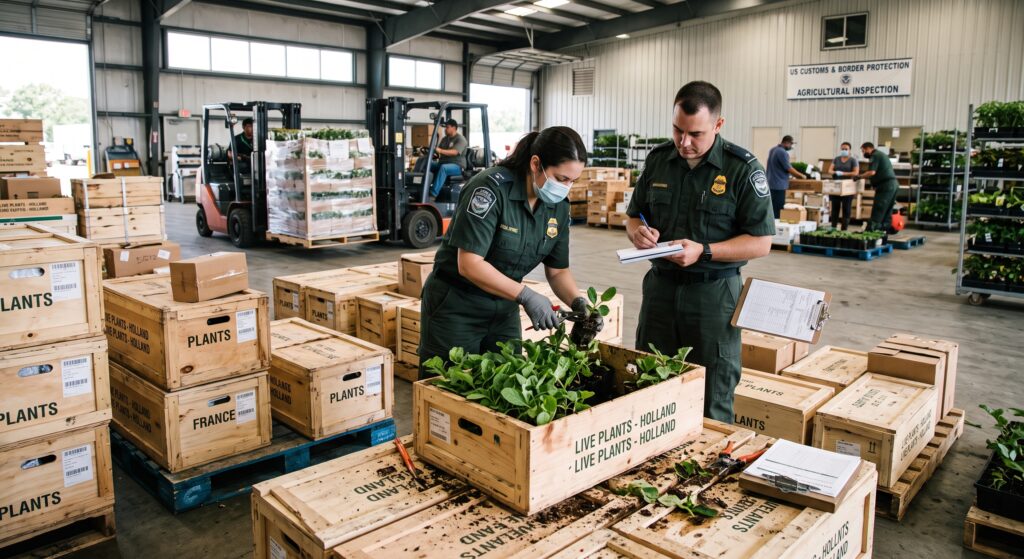
BLUF: On arrival, your consignment is quarantined and physically inspected against the conditions specified in the Import Permit, and inspectors can choose to release, treat, destroy, or return the shipment based on what they find.
- Satisfactory inspection: DPP issues the Plant Protection Release Order, and Customs clears the shipment.
- Pest or disease found: The consignment may be fumigated or otherwise treated at the importer’s cost before release.
- Non-compliant shipment: Inspectors can order the consignment destroyed or returned to the country of origin.
⚠️ Common Client Mistake: Assuming a shipment “should be fine” without the correct pre-shipment permit, because it looks visibly healthy. Quarantine inspection decisions are based on documentation and pest risk, not visual plant health alone.
Applying Through the Pakistan Single Window (PSW) System
BLUF: Import Permit and Release Order applications are now processed electronically through the Pakistan Single Window (PSW) system, replacing manual, in-person DPP office visits.
- Traders and customs agents must be registered with PSW, with their bank profile linked to their business profile.
- Import Permit requests are submitted through the trader dashboard, including consignment information and the commodity’s HS code and product code.
- The system provides real-time visibility into document calling, inspection scheduling, and approval or rejection status.
🛠️ Professional Tip: Register your PSW trader profile well ahead of your intended import date. Account setup and bank profile linkage can take longer than the actual permit application once you’re registered.
Required Documents for Import Clearance
BLUF: A compliant plant shipment needs a valid Import Permit, a valid Phytosanitary Certificate from the exporting country, plus standard commercial shipping documentation.
- Valid Import Permit issued by DPP, obtained before shipment.
- Valid Phytosanitary Certificate issued by the exporting country’s plant protection authority.
- Commercial Invoice issued by the exporter.
- Packing List issued by the exporter.
- Bill of Lading, Airway Bill, or equivalent shipping document, plus the Bill of Entry for customs processing.
CITES-Listed Plants: An Extra Layer for Rare Specimens
BLUF: Rare specimen plants like certain cycad species can fall under CITES protection, which means importers face an additional legal requirement under the Pakistan Trade Control of Wild Fauna and Flora Act, 2012, on top of standard DPP phytosanitary rules.
If you’re sourcing rare cycads, orchids, or other protected flora, confirm the species’ CITES status before ordering. Importing a CITES Appendix-listed specimen without the correct authorization is a separate legal exposure from a standard phytosanitary compliance issue.
⚠️ Common Client Mistake: Treating a rare cycad purchase the same as an ordinary palm or bonsai import, without checking whether the specific species carries CITES restrictions.
Soil, Packing Material, and Live Plant Restrictions
BLUF: Soil and certain packing materials are commonly restricted or prohibited in plant imports because they can carry pests and pathogens independent of the plant itself.
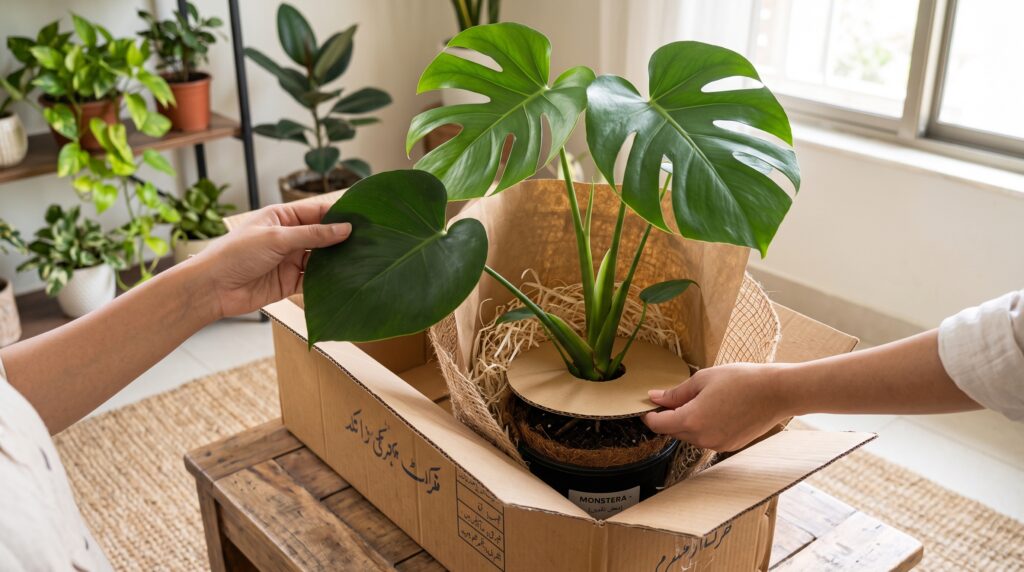
Live plants are frequently required to arrive bare-root or with approved growing media rather than in field soil from the country of origin, since untreated soil is a recognized high-risk pathway for introducing pests and plant diseases. Confirm current soil and packing material conditions for your specific commodity and country of origin directly with DPP before shipment.
Planning Timeline: Building Import Compliance Into Your Project Schedule
BLUF: Because the Import Permit has a limited validity window and inspection outcomes aren’t guaranteed in advance, plant import compliance needs to be built into your project timeline early, not treated as a final-week formality.
| Stage | Who Handles It | Key Timing Factor |
|---|---|---|
| Pest Risk Analysis | DPP (as needed for new commodity/country combinations) | Can extend timeline if not previously assessed |
| Import Permit application | Importer, via PSW | Apply well before intended shipping date |
| Shipment window | Exporter | Must ship within Import Permit’s validity period |
| Port inspection & Release Order | DPP at port of entry | Allow buffer time for inspection outcome |
How Design & Concept Studio Supports Clients Through Import Compliance
BLUF: While we are not a licensing authority, our nursery sourcing experience means we coordinate closely with clients and their import agents to plan realistic timelines and documentation sequencing for imported specimen plants.
We’ve sourced imported bonsai, cycads, and specimen palms for landscape projects across Pakistan, and that experience means we understand where in the DPP process delays typically happen allowing us to plan project timelines that account for realistic import clearance windows.
If you’re planning a landscape project involving imported flora, our team can help you sequence the sourcing and planting timeline around realistic import compliance expectations always in coordination with your own customs agent or import specialist for the formal permit process itself.