Skip to content
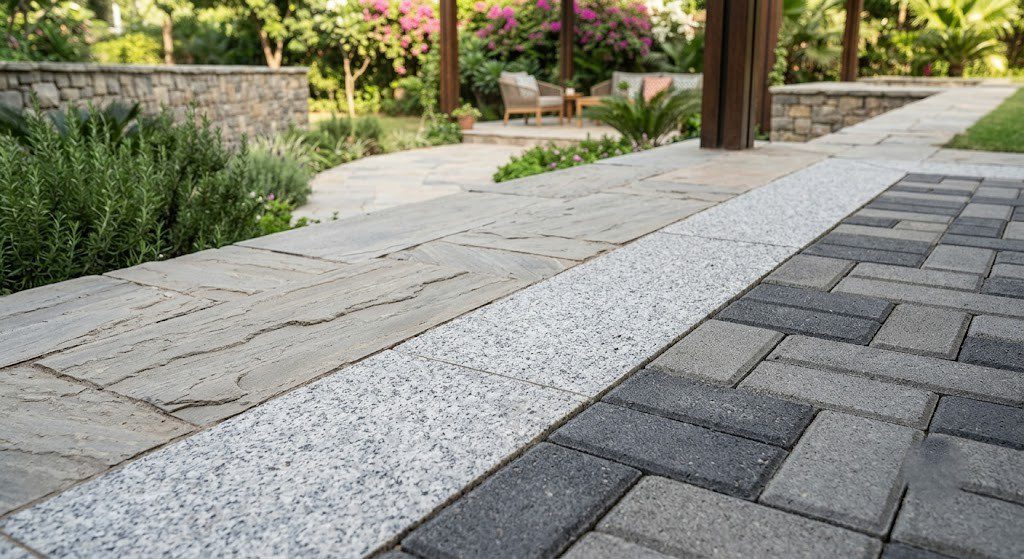
How to Choose Durable Hardscape Materials in Pakistan
Summary: Choosing durable hardscape materials Pakistan means evaluating heat retention, water absorption, and installation quality not just visual appeal or price per square foot. In most of the country, heat performance and monsoon water resistance matter far more than freeze-thaw durability, which is only relevant in northern hill areas.
Material Choice Determines Whether Your Hardscape Lasts
Choosing durable hardscape materials Pakistan is not just a style decision it’s a climate-engineering decision. The same stone that looks stunning in a showroom photo can become unusable in your own backyard if it retains too much heat or absorbs monsoon water.
At Design & Concept Studio, 13 years of executing pathways, patios, and driveways across DHA City Karachi, DHA Lahore, and Bahria Town has shown us that material failures are rarely about the material itself they’re about mismatching a material to local climate conditions, or pairing a good material with poor sub-base installation.
This guide breaks down how to actually evaluate hardscape materials for Pakistan’s heat, monsoon humidity, and (in select regions) cold-weather cycling.
The Three Factors That Actually Determine Durability
Summary: Durable hardscape materials in Pakistan need to be evaluated on heat retention, water absorption, and installation compatibility these three factors matter more than brand names or visual trends. Getting this wrong is why so many patios and driveways fail or become uncomfortable within a few years.
Heat Retention
Dark, dense stone surfaces can become uncomfortably hot underfoot during peak summer sun exposure. Lighter-colored and certain textured materials stay significantly cooler.
Water Absorption
Porous materials absorb monsoon rainfall, which can lead to staining, algae growth, and in northern/hill regions only freeze-related cracking during winter cold snaps.
Installation Compatibility
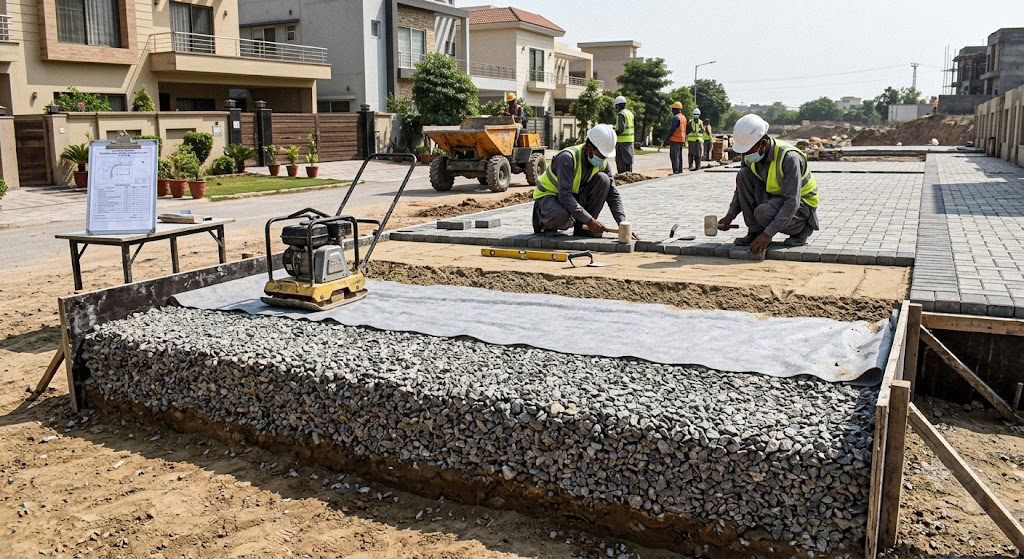
Even the most durable material will fail prematurely if it isn’t paired with proper sub-base compaction and drainage slope a point we cover in depth in our Hardscape Design guide.
⚠️ Common Client Mistake: Homeowners frequently select a material based purely on showroom appearance without asking about its heat retention or water absorption rating for outdoor use. The same stone that looks premium indoors can be both too hot to walk on and prone to water staining outdoors.
Natural Stone Options for Pakistan’s Climate
Summary: Sandstone, granite, and limestone are the three most common natural stone choices for hardscape in Pakistan, each with different heat, water absorption, and durability characteristics. Granite generally performs best for high-traffic, high-heat areas, while sandstone needs careful sealing to manage water absorption.
Sandstone
Popular for its natural, textured appearance and relatively cooler surface temperature compared to denser stones. Its porous structure means it requires sealing to manage water absorption during monsoon season.
Granite
Extremely dense and durable, with strong resistance to scratching and staining. It can retain more heat than lighter stones, so color selection matters for patios and pool decks in direct sun.
Limestone
Offers a refined, uniform look but is more porous than granite, making proper sealing essential in humid or monsoon-exposed areas to prevent staining and surface erosion over time.
💡 Our Experience: On DHA City Karachi projects near open, sun-exposed courtyards, we’ve consistently steered clients toward lighter-toned granite or properly sealed sandstone over darker stone options the difference in surface temperature during peak summer afternoons is significant enough to affect whether the space actually gets used.
Manufactured and Composite Options
Summary: Concrete pavers, interlocking pavers, and brick offer more predictable durability and cost control than natural stone, making them a practical choice for driveways and high-traffic areas. These materials perform reliably across most of Pakistan’s climate zones when installed with proper sub-base preparation.
Concrete Pavers
Cost-effective, widely available, and manufactured to consistent specifications a reliable choice for driveways and pathways when paired with correct sub-base compaction.
Interlocking Pavers
Offer flexibility for curved layouts and easier individual-unit replacement if a section is damaged, without needing to redo an entire surface.
Brick Pavers
A traditional, durable option for boundary paths and accent paving, with good long-term performance when properly sealed against moisture.
🛠️ Professional Tip: For driveways specifically which see the heaviest structural load and vehicle weight concrete or interlocking pavers over a properly engineered sub-base typically offer more predictable long-term durability than natural stone, at a lower material cost.
Material Comparison Table
Summary: Comparing hardscape materials side by side on heat retention, water absorption, and best use case makes it easier to match material choice to your specific project a patio needs different properties than a driveway. Use this table as a starting framework before finalizing material selection with your contractor.
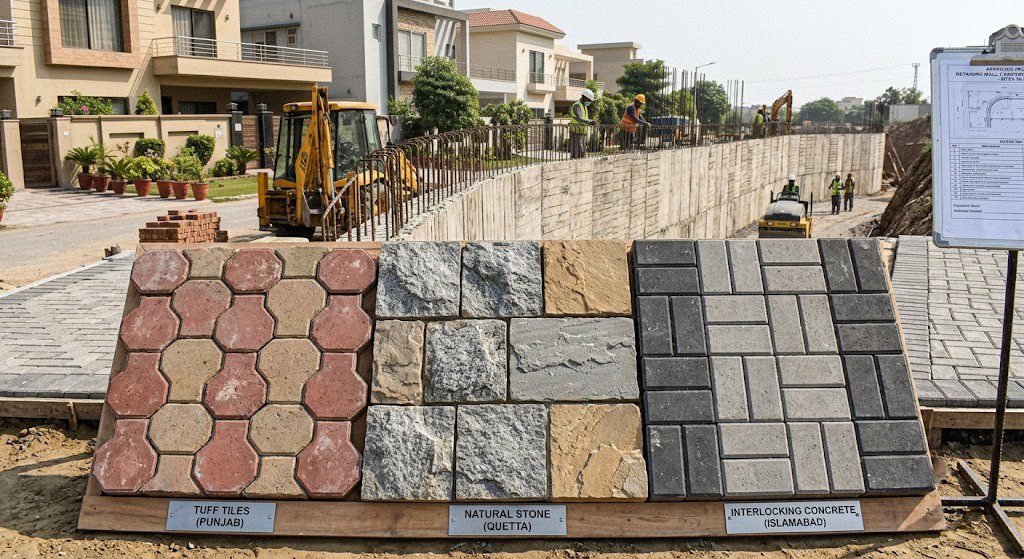
| Material | Heat Retention | Water Absorption | Best Use Case |
|---|---|---|---|
| Sandstone | Moderate (cooler than dense stone) | High — requires sealing | Pathways, patios, feature walls |
| Granite | High (especially dark tones) | Low | High-traffic driveways, durable accents |
| Limestone | Moderate | High — requires sealing | Decorative paving, low-traffic areas |
| Concrete Pavers | Moderate (lighter tones cooler) | Low-Moderate | Driveways, walkways |
| Interlocking Pavers | Moderate | Low-Moderate | Curved layouts, pathways |
| Brick Pavers | Moderate | Moderate — benefits from sealing | Boundary paths, accent paving |
Regional Considerations Across Pakistan
Summary: Most of Pakistan’s climate zones prioritize heat resistance and monsoon water management over freeze-thaw durability, which only becomes a meaningful factor in northern and hill-station regions with sustained winter freezing. Match your material priorities to your actual regional climate rather than following generic international guidance.
- Karachi and coastal areas: Prioritize water absorption resistance and salinity tolerance due to humidity and coastal air exposure.
- Lahore and Punjab plains: Prioritize heat retention performance for long, intense summers, alongside monsoon water management.
- Islamabad and northern regions: Freeze-thaw resistance becomes genuinely relevant here, alongside heat and water considerations.
⚙️ What We Learned in the Field: Freeze-thaw cracking is a real concern in Islamabad and northern hill projects, but it’s frequently over-referenced in generic hardscape content aimed at the rest of Pakistan, where heat cycling and monsoon water absorption are actually the dominant stress factors we design against.