Skip to content
Koi Pond Construction in Pakistan: A Step-by-Step Guide
Summary: Successful koi pond construction Pakistan depends on proper depth, robust filtration, and heat management not just an attractive liner and stone edging. Fish health failures almost always trace back to inadequate filtration or insufficient depth, not the fish themselves, making these technical foundations more important than any single design choice.
The Part Most Guides Skip
Koi pond construction in Pakistan is often approached as a design project first choosing a shape, selecting stone edging, planning a waterfall with filtration and depth treated as secondary details to sort out later. That order of priorities is backward, and it’s why so many first-time koi ponds struggle within their first year.
A koi pond is a living system before it’s a design feature. Filtration, circulation, and depth determine whether the fish survive and the water stays clear; everything else is finishing work built on top of that foundation.
This guide walks through koi pond construction in Pakistan step by step, starting with the technical fundamentals that actually determine long-term success.
Step 1: Site Selection and Pond Sizing
Summary: Site selection for koi pond construction needs to balance sun exposure, tree proximity, and access for equipment and future maintenance location decisions made early significantly affect both construction difficulty and long-term water quality management. Pond size and depth should be planned together, not decided separately.
- Sun exposure: Full, unshaded sun exposure in Pakistan’s climate can accelerate algae growth and heat stress; partial shade, or shade provided by floating plants, generally supports better water quality.
- Distance from trees: Overhanging trees drop leaves and debris into the pond, increasing filtration load and degrading water quality faster than an open location.
- Access for construction and maintenance: Equipment access during construction, and ongoing access for filter servicing and cleaning, should factor into site placement from the start.
⚠️ Common Client Mistake: Choosing a pond location purely for its visual position in the garden, without considering tree debris, full sun exposure, or long-term maintenance access. A beautifully positioned pond that’s difficult to maintain or constantly battling algae from full sun exposure becomes a burden rather than a feature.
Step 2: Depth and Excavation
Summary: Koi pond depth needs to account for fish health and Pakistan’s summer heat specifically shallow ponds heat up faster and lose oxygen capacity, creating stress for fish during Pakistan’s intense summer months. Depth planning here is as much about climate management as it is about fish size accommodation.
- Adequate depth for fish health: Sufficient depth gives koi room to thermoregulate and reduces the rate at which the pond heats up during intense summer sun.
- Excavation for structural elements: Depth planning needs to account for any bottom drain, filtration plumbing, or structural footing built into the pond base.
- Consistent depth zones: Combining deeper zones for fish refuge with shallower marginal zones for aquatic plants gives both functional and design flexibility.
💡 Our Experience: On Waterscape Architecture projects across our portfolio, we’ve found that adequate pond depth matters more in Pakistan’s climate for heat and oxygen management than it typically does in guidance written for cooler climates focused on winter freeze protection the engineering priority here is genuinely different.
Step 3: Waterproofing and Structural Construction
Summary: Koi pond waterproofing generally uses either a flexible liner system or a concrete shell with a waterproof membrane, each with different durability, cost, and structural implications this decision should be made based on long-term durability needs, not just upfront cost. This is the same structural waterproofing discipline the firm applies across Hard-Landscape work.
- Flexible liner systems: Generally faster to install and more budget-flexible, using a durable synthetic liner material fitted to the excavated pond shape.
- Concrete construction: More labor-intensive and structurally involved, but offers greater long-term durability and design flexibility for custom shapes, viewing windows, or integrated features.
- Waterproofing integrity: Regardless of method, waterproofing needs to be verified thoroughly before backfilling or finishing, since leaks discovered after completion are far more costly to fix.
🛠️ Professional Tip: Test waterproofing integrity by filling the pond and monitoring water level for several days before installing any finishing stonework or edging catching a waterproofing issue at this stage is dramatically simpler and cheaper than discovering it after the pond is fully finished.
Step 4: Filtration System Installation
Summary: A koi pond filtration system combines mechanical filtration (removing debris) and biological filtration (processing fish waste into less harmful compounds), and skipping or undersizing either component is the leading cause of poor water quality and fish health problems. This is the single most important technical system in the entire build.
- Mechanical filtration: Physically removes debris and particulate matter from the water, typically the first stage water passes through.
- Biological filtration: Houses beneficial bacteria that convert fish waste byproducts into less harmful compounds, essential for maintaining safe long-term water chemistry.
- UV clarification: Commonly used to control algae growth and improve water clarity, particularly relevant in Pakistan’s high-sun-exposure conditions.
- Bottom drains: Help remove settled debris from the pond floor, reducing the ongoing load on mechanical filtration.
⚙️ What We Learned in the Field: Undersized filtration relative to pond volume and fish stocking level is the most common technical shortfall we see in ponds built without proper engineering input a beautifully constructed pond with inadequate filtration will struggle with water clarity and fish health regardless of how well everything else was built.
Step 5: Circulation, Aeration, and Water Quality Management
Summary: Proper water circulation and aeration maintain oxygen levels and prevent stagnant zones where water quality can deteriorate, particularly important in Pakistan’s warm climate where oxygen holding capacity decreases as water temperature rises. Ongoing water quality monitoring, not just initial system installation, determines long-term pond health.
- Pump sizing relative to pond volume: Circulation needs to be sufficient to turn over the full pond volume regularly, with exact requirements varying by pond size and fish stocking density.
- Aeration: Supplemental aeration helps maintain oxygen levels, especially valuable during Pakistan’s hottest months when warm water holds less dissolved oxygen.
- Water quality monitoring: PH and oxygen levels should be checked regularly rather than assumed stable, since gradual shifts can stress fish before becoming visually obvious.
Step 6: Finishing Stone Edging, Aquatic Plants, and Design Integration
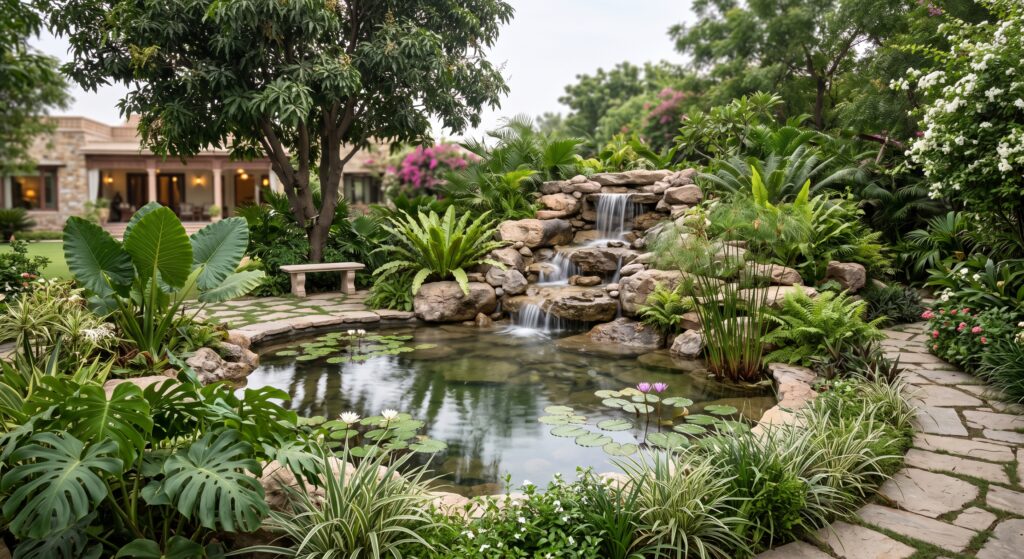
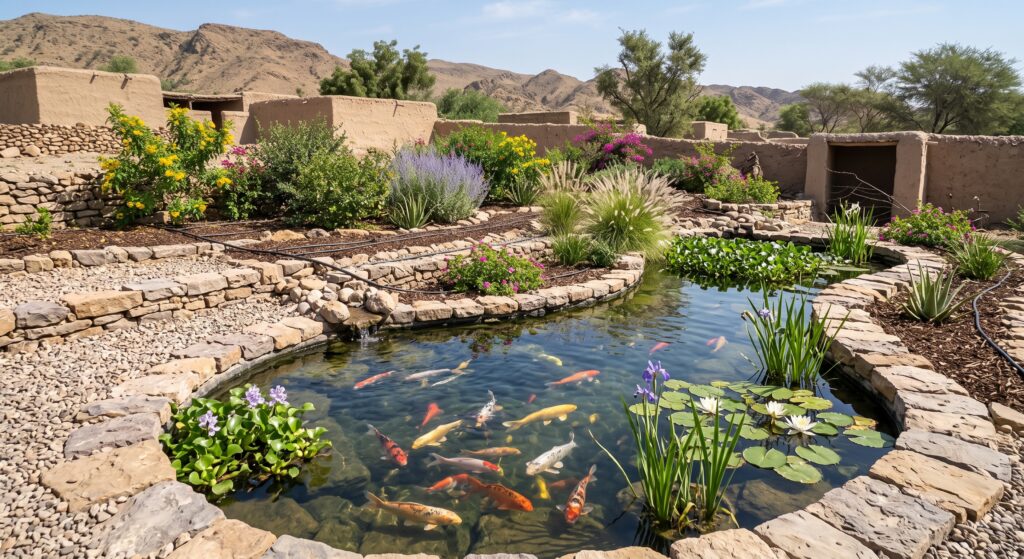
Summary: Once the technical systems are proven functional, finishing elements stone edging, aquatic plants, and integration with the surrounding landscape design complete the pond as both a functional habitat and a design feature. This is deliberately the last step, built on top of a verified working system rather than a substitute for one.
- Stone edging: Connects the pond visually to surrounding hardscape, following the same material selection principles covered in our durable hardscape materials guide.
- Aquatic and marginal plants: Provide shade, natural filtration support, and visual softening around the pond edge.
- Integration with overall garden design:Positioning the pond as part of the broader landscape composition, not an isolated feature.