Skip to content
Water Wise Landscaping for Pakistan’s Arid Regions
Summary: Water wise landscaping Pakistan uses drought-tolerant plant selection, hydrozoning, mulching, and efficient irrigation to significantly cut landscape water demand xeriscaped landscapes can reduce water use by 60% or more compared to conventional lawn-heavy designs. This is a design approach, not a compromise on color or visual appeal.
Water Wise Landscaping Isn’t Rocks and Cacti
Water wise landscaping in Pakistan is often misunderstood as giving up a lush, colorful garden in exchange for gravel and succulents. That’s not what the approach actually involves it’s a design strategy built around drought-tolerant plant selection, smart irrigation, and grouping plants by water need, not a stripped-down aesthetic compromise.
Given landscape irrigation can account for a substantial share of total household water use during the growing season, and given Pakistan’s broader water scarcity context, water wise landscaping is a genuinely practical design direction for arid and semi-arid regions interior Sindh, southern Punjab, and Balochistan in particular, though the principles apply anywhere water efficiency matters.
This guide covers the core principles of water wise landscaping and how to apply them without sacrificing the visual richness of a well-designed garden.
What Water Wise Landscaping Actually Reduces
Summary: Water wise landscaping doesn’t eliminate irrigation entirely it reduces overall water demand substantially through better plant selection and design, with documented reductions of 60% or more compared to conventional lawn-heavy landscapes. Understanding this framing helps set realistic expectations for what the approach delivers.
Water wise (xeriscape) design principles have been shown to cut landscape water use by 60% or more compared to conventional, lawn-dominant designs, without eliminating green space or visual appeal. The reduction comes from a combination of strategies working together, not from any single change.
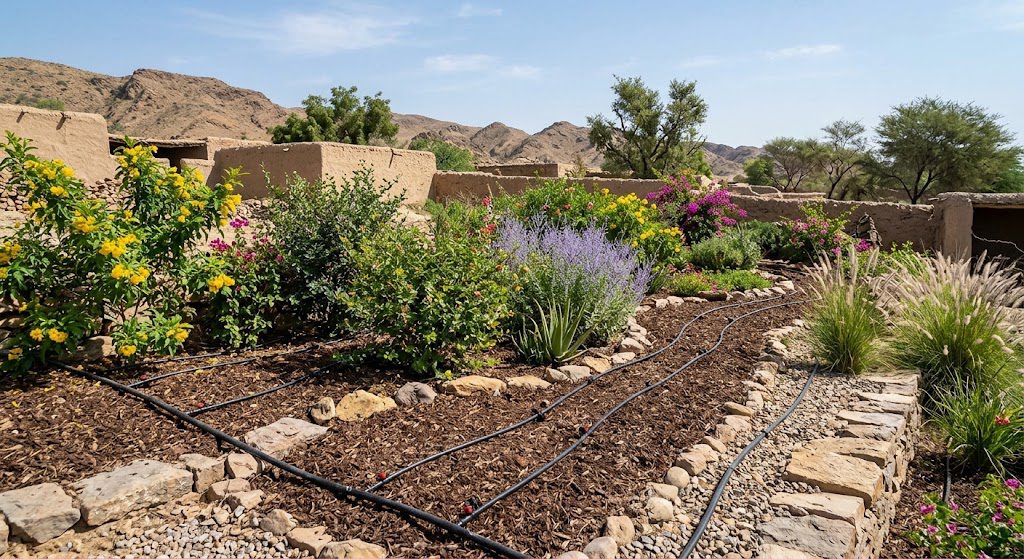
⚠️ Common Client Mistake: Property owners sometimes assume water wise landscaping means replacing most of a garden with gravel and minimal planting. In practice, well-designed water wise gardens can be just as visually rich as conventional ones the difference is in plant selection and water management strategy, not overall greenery.
Core Principle: Hydrozoning
Summary: Hydrozoning means grouping plants with similar water needs together, rather than mixing high-water and low-water plants throughout a single bed this prevents overwatering drought-tolerant species or underwatering thirstier ones. It’s one of the most effective, lowest-cost water wise design principles to apply.
- Group by water need, not just by appearance or bloom timing, so irrigation can be calibrated to each zone rather than applied uniformly across the whole garden.
- Position higher-water plants including any turf areas closer to the house or high-visibility zones where more frequent irrigation is easiest to manage.
- Position drought-tolerant plants in outer or less frequently irrigated zones, where they can thrive with minimal supplemental water once established.
💡 Our Experience: On landscape designs across Pakistan’s more arid regions, grouping drought-tolerant native and adapted species into dedicated zones separate from any turf or higher-water ornamental beds has consistently made irrigation management simpler and more efficient than mixed planting, where every bed ends up watered to suit its thirstiest plant.
Core Principle: Drought-Tolerant and Native Plant Selection
Summary: Choosing drought-tolerant and regionally adapted plants is the foundation of water wise landscaping, directly connecting to the native-versus-exotic evaluation covered in our native plants guide. Species that have adapted to arid conditions over time generally require significantly less supplemental irrigation once established than imported or high-water-demand alternatives.
- Favor native and regionally proven species as covered in our native vs. exotic plants guide, species with a genuine track record in Pakistan’s specific soil and climate conditions generally perform better with less water input.
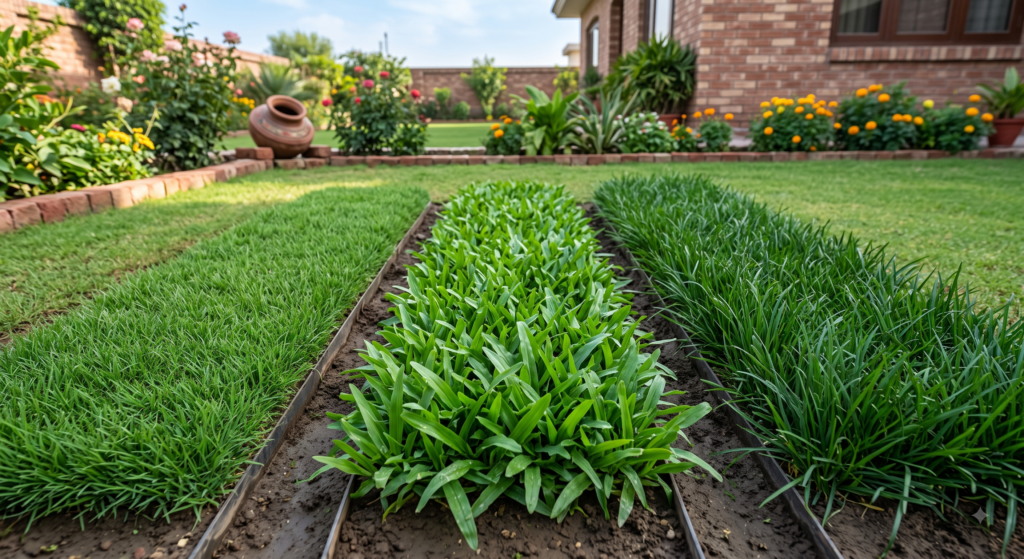
- Choose drought-tolerant turf where lawn is wanted Fine Dhaka grass, covered in our best grass types guide, is a notably drought-tolerant option for water-conscious lawn areas.
- Reduce turf footprint strategically rather than eliminating it replacing only the highest-water, lowest-use turf areas with drought-tolerant planting or groundcover often achieves meaningful savings without sacrificing usable lawn space.
Core Principle: Mulch and Soil Moisture Retention
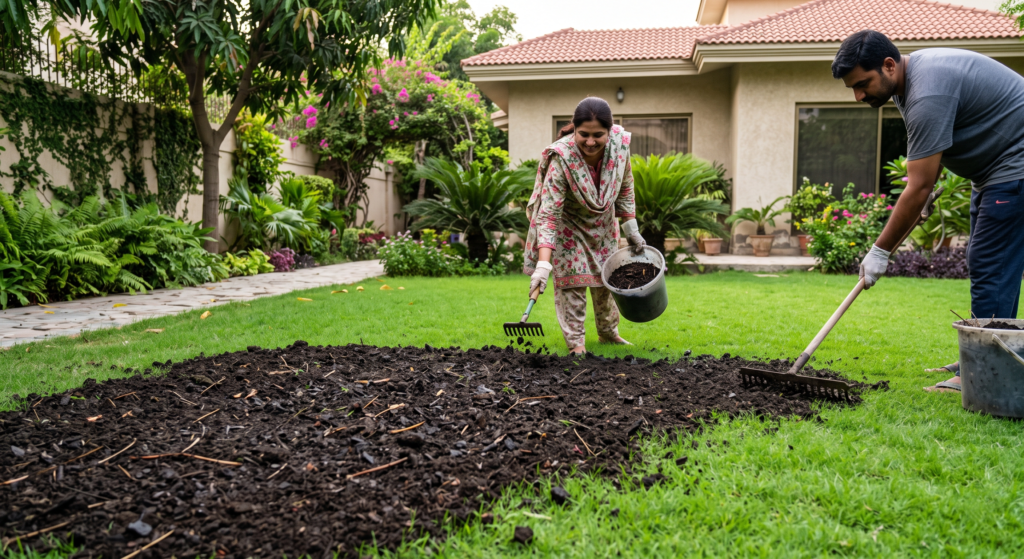
Summary: Mulch reduces evaporation, moderates soil temperature, and suppresses competing weed growth, all of which reduce a garden’s overall irrigation demand. This is a simple, low-cost addition to any water wise landscape design.
- Organic mulch: Reduces evaporation while gradually improving soil structure as it breaks down.
- Inorganic mulch (stone or gravel): Useful in specific zones, though best avoided directly against structures or in full, intense sun exposure where it can reflect additional heat.
- Consistent mulch depth across planting beds maximizes moisture retention benefit rather than patchy application.
🛠️ Professional Tip: Apply mulch as part of the initial planting process, not as an afterthought mulch applied to already-dry, moisture-stressed soil doesn’t deliver the same benefit as mulch applied when soil moisture is already being properly managed from the start.
Core Principle: Efficient Irrigation Design
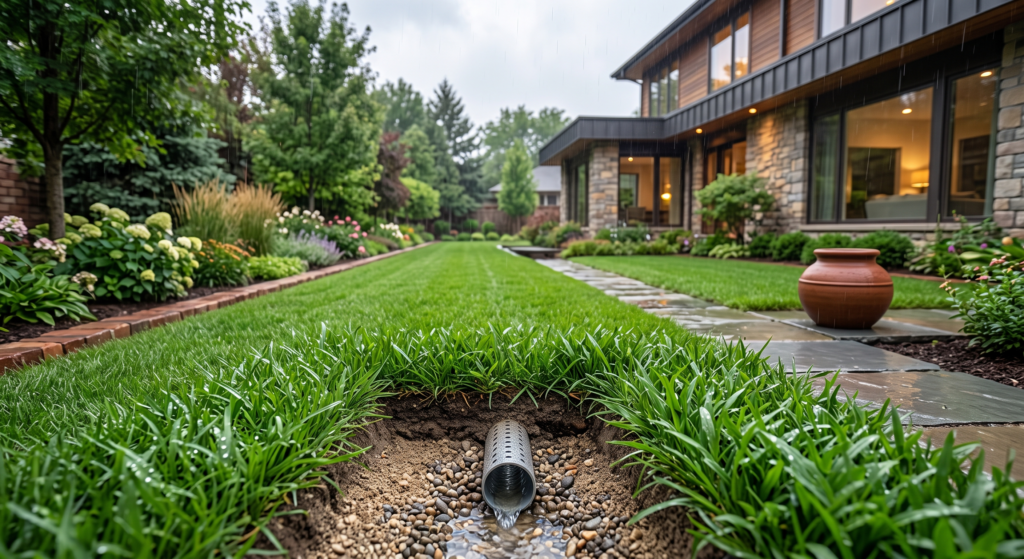
Summary: Drip irrigation delivers water directly to plant root zones with far less loss to evaporation and runoff than sprinkler-based systems, making it a core component of any genuinely water wise landscape. Matching irrigation method to plant grouping and hydrozone is as important as the plant selection itself.
- Drip irrigation for planting beds: Delivers water precisely where it’s needed, minimizing evaporative loss compared to broad sprinkler coverage.
- Zoned irrigation control: Allowing different hydrozones to be watered on different schedules based on actual need, rather than a single uniform system-wide schedule.
- Soil moisture-based scheduling: Adjusting irrigation frequency based on actual soil moisture and seasonal conditions rather than a fixed calendar schedule.
⚙️ What We Learned in the Field: Pairing hydrozoned planting design with zoned drip irrigation rather than retrofitting efficient irrigation onto an already mixed, undifferentiated planting layout consistently produces better water savings on the arid-region projects we’ve designed than adding efficient irrigation as an afterthought to a conventional planting plan.
Water Wise Design Doesn’t Mean Sacrificing Color
Summary: A well-designed water wise landscape can incorporate genuine seasonal color and visual richness by combining drought-tolerant flowering species with the hydrozoning and mulching principles already covered the misconception that water efficiency requires visual sacrifice comes from poorly executed, plant-sparse examples, not from the approach itself.
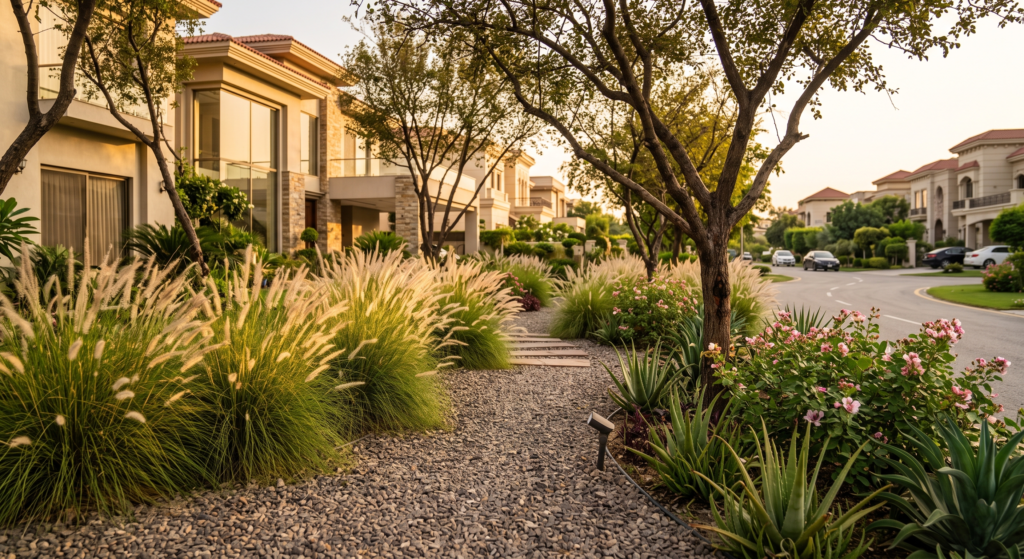
Combining drought-tolerant flowering species with thoughtful hydrozoning and layered planting design the same composition principles covered in our seasonal planting guide produces a garden that’s both water-efficient and visually engaging, rather than the stripped-down gravel-and-succulent image the term often conjures.