Skip to content

Protect Imported Plants From Heat Pakistan
Summary: Protect imported plants from heat Pakistan requires managing shade, soil moisture, and root zone temperature together not simply watering more when a plant wilts. European and other temperate-origin species face a genuine climate gap in Pakistan’s summer heat, and wilting is often a protective response rather than a sign of insufficient water.
The Climate Gap Nobody Warns You About
Imported European plants face a genuine climate gap when brought into Pakistan temperatures, sun intensity, and heat duration far beyond what these species evolved to handle. Protect imported plants from heat Pakistan isn’t optional seasonal maintenance; for temperate-origin species, it’s often the difference between survival and loss.
This connects directly to the acclimatization principles covered in our greenhouse builders guide initial acclimatization gets a plant established, but ongoing heat protection through Pakistan’s summer months is a separate, continuous responsibility.
This guide covers the practical, actionable steps to protect temperate and European-origin plants during Pakistan’s hottest stretches.
Understanding Heat Stress Before You React
Summary: Wilting during extreme heat is often a protective response that reduces water loss through the leaves, and it can occur even when soil moisture is adequate meaning the instinctive reaction to water more isn’t always the correct one. Checking actual soil moisture before reacting prevents the equally damaging mistake of overwatering.
- Wilting isn’t always a water problem: A plant can wilt from heat stress even with sufficiently moist soil, as a protective mechanism reducing water loss through leaf surfaces.
- Check soil moisture before watering more: Feel the soil an inch or two below the surface; if it’s still moist, additional water may cause waterlogging rather than helping the plant.
- Overwatering compounds heat stress: Waterlogged, oxygen-depleted soil invites root disease, adding a second problem on top of heat stress rather than solving the first one.
⚠️ Common Client Mistake: Reacting to a wilting imported plant by immediately increasing watering, without first checking whether the soil is actually dry. This can lead to overwatering a plant that was already wilting as a normal heat-stress response, compounding the problem with waterlogged roots.
Shade: The Single Most Effective Heat Protection Tool
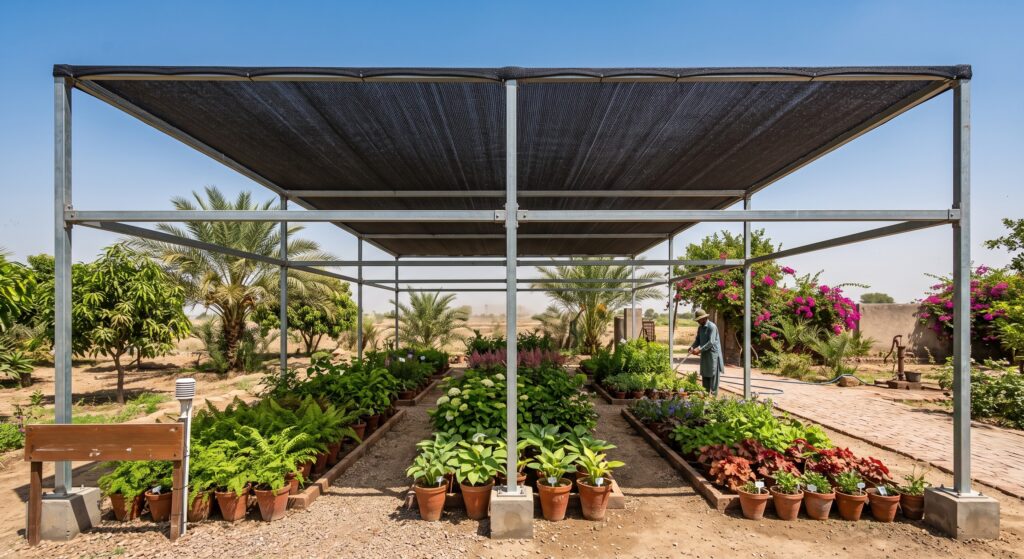
Summary: Shade cloth providing roughly 30–50% shade reduces direct sun exposure enough to meaningfully lower plant stress without depriving the plant of the light it still needs, and can lower temperatures under the cloth by a noticeable margin. This is generally the most effective and immediate action for protecting a temperate-origin plant during a heat event.
- Shade cloth (30–50% shade factor): Sufficient to protect most sensitive species while still allowing adequate light through.
- Positioning for airflow: Shade cloth should be elevated on a frame rather than draped directly on the plant, allowing air circulation underneath.
- Potted plants: Move containers to a shaded location, against a cool wall, or beneath tree canopy; potted plants heat up considerably faster than plants in the ground.
- Blocking the hottest afternoon sun specifically: Even partial shade during the most intense afternoon hours meaningfully reduces overall heat stress.
💡 Our Experience: On plant acclimatization work with temperate and imported specimens, shade cloth positioned to block the harshest afternoon sun rather than shading the plant all day has consistently given the best balance between heat protection and maintaining adequate light for healthy growth.
Soil, Mulch, and Root Zone Temperature Management
Summary: A thick mulch layer and deep, well-timed watering keep the root zone cooler and more stable through Pakistan’s hottest hours, since root zone temperature affects plant stress as much as air temperature and direct sun exposure. This is a proactive measure to apply before heat waves, not just a reaction during one.
- Mulch depth of 2–4 inches: Shades the soil surface, slows evaporation, and buffers root zone temperature swings.
- Deep watering the evening or early morning before extreme heat: Allows water to reach the root zone and keeps soil temperature more stable through the following hot day.
- Avoid watering in direct midday sun on foliage: Later droplets on leaves in full sun can act like small magnifying lenses, intensifying heat and causing leaf scorch rather than cooling the plant.
🛠️ Professional Tip: Water at the base of the plant rather than overhead, particularly during active heat this delivers moisture directly to the root zone where it’s needed, without the leaf-scorch risk that overhead watering under direct sun can create.
What to Avoid During Active Heat Stress
Summary: Avoid pruning, fertilizing, transplanting, or aggressive soil disturbance around a plant during extreme heat, since these activities add additional stress precisely when the plant has the least capacity to recover from it. Save these interventions for cooler conditions.
- Avoid fertilizing during heat waves: A plant’s ability to absorb nutrients is diminished under heat stress, and fertilizer application can add further stress rather than support recovery.
- Avoid pruning or transplanting: Both create additional stress and open wounds at exactly the wrong time.
- Avoid disturbing soil around roots: Digging, cultivating, or aggressive weeding during extreme heat can release trapped soil moisture and expose roots to additional heat and sun.
⚙️ What We Learned in the Field: Well-intentioned intervention pruning back a stressed plant, adding fertilizer to “help it bounce back” is one of the most common causes of setbacks we see on heat-stressed imported specimens; the correct response during active heat stress is almost always to reduce intervention, not increase it.
Building Long-Term Heat Resilience
Summary: Beyond reacting to individual heat waves, choosing appropriately shaded planting locations, maintaining consistent soil health, and gradually building a plant’s tolerance through proper long-term care all improve resilience to Pakistan’s recurring summer heat. This connects the immediate protective measures above to the broader acclimatization strategy covered in our greenhouse guide.
- Strategic planting location: Positioning temperate-origin species where they receive natural afternoon shade from structures or established trees reduces ongoing heat exposure.
- Consistent soil health: Well-structured, organically amended soil retains moisture more effectively and supports better root resilience under heat stress.
- Gradual acclimatization over time: Plants that have been properly acclimatized, as covered in our greenhouse guide, generally show better resilience to subsequent heat events than plants placed directly into full exposure.