Skip to content
Seasonal Planting Pakistan: Color Schemes That Actually Work
Summary: Seasonal planting in Pakistan follows a different calendar than most generic gardening guides suggest on the plains, winter is the primary ornamental flowering season, not summer, since Pakistan’s mild winter temperatures mimic what many popular annuals need to bloom. Building a color scheme around this actual calendar, rather than a generic Western planting guide, is what produces a garden that looks intentional year-round.
Why Most Seasonal Planting Advice Doesn’t Fit Pakistan
Search for seasonal planting in Pakistan and you’ll find plenty of content listing tulips for spring and chrysanthemums for autumn planting advice written for a temperate climate and applied to Pakistan without adjustment. It doesn’t hold up, because Pakistan’s growing calendar genuinely works differently.
On Pakistan’s plains Lahore, Karachi, Peshawar, and similar regions winter, not summer, is the primary ornamental flowering season. Many of the annuals grown here as “winter flowers” are the same species that bloom in summer in cooler climates like the UK; Pakistan’s mild winter simply provides the temperature range those plants actually need.
This guide covers seasonal planting in Pakistan based on how the local calendar actually works, along with practical guidance on building a color scheme that reads as intentional rather than accidental.
Understanding Pakistan’s Actual Flowering Calendar
Summary: Pakistan’s plains follow a winter-dominant ornamental flowering pattern, with major planting activity concentrated in the cooler months rather than summer. Species that flower as summer annuals in temperate climates often perform as winter or early-spring bloomers in Pakistan’s plains due to the milder winter temperature range.
- Winter (roughly November through March/April): The primary ornamental flowering window on Pakistan’s plains, when most popular annual color displays are planted and bloom.
- Summer (roughly May through September): Pakistan’s intense summer heat limits which ornamental flowering annuals thrive, making this a more foliage- and heat-tolerant-plant-focused season for many gardens.
- Transition periods: Spring and autumn function more as planting/preparation windows for the following season than as major bloom periods in their own right on the plains.
💡 Our Experience: On residential and estate planting schemes across DHA and Bahria Town developments, we consistently plan the boldest seasonal color displays for the winter months, since this is genuinely when Pakistan’s plains climate supports the widest range of vibrant flowering annuals a scheduling decision that surprises clients used to thinking of summer as “planting season.”
Popular Seasonal Flowering Options for Pakistan’s Plains
Summary: Petunias, gazanias, and locally grown dahlia varieties are among the most reliable, widely available flowering options for Pakistan’s winter-dominant planting season, each offering different bloom duration, color range, and care requirements. Choosing a mix of these with staggered bloom timing helps extend color through the full cool season.
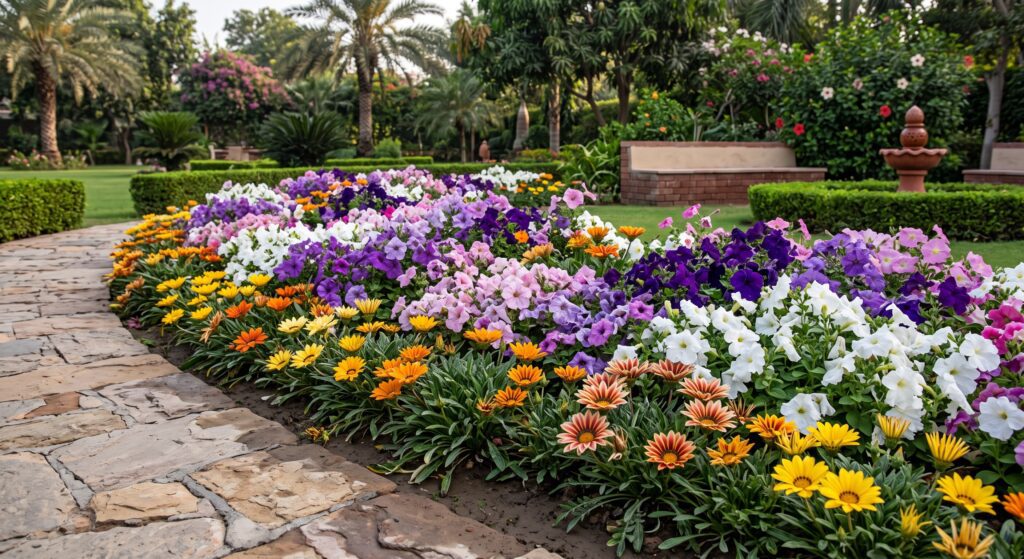
Petunia
Widely regarded as one of the easiest, longest-blooming winter annuals in Pakistan, with a flowering window extending roughly from December through May and available in a wide range of colors and forms.
Gazania
A heat-tolerant option with strong color impact, generally flowering from February through June a useful choice for extending color into the warmer transition period as winter annuals begin to fade.
Dahlia (Pakistani varieties)
Locally grown dahlia varieties flower over an extended window, roughly December through June, offering strong seasonal color with generally lower maintenance demands than imported cutting varieties.
⚠️ Common Client Mistake: Homeowners sometimes plant based on a flower’s reputation from Western gardening content rather than confirming it’s actually well-suited and reliably available for Pakistan’s climate. A gorgeous tulip photo doesn’t translate to Pakistan’s plains the way petunias, gazanias, or local dahlia varieties genuinely do.
Building a Color Scheme: Design Principles for Seasonal Planting
Summary: A well-composed seasonal planting scheme in Pakistan considers color palette cohesion, plant height layering, and bloom succession not just which individual flowers look nice on their own. Thoughtful composition is what separates a garden that reads as designed from one that reads as a random collection of plants.
- Color palette cohesion: Choosing a deliberate color range (complementary or monochromatic) rather than mixing every available color creates a more intentional, higher-impact display.
- Plant height layering: Combining taller background plants, mid-height fillers, and low border plants creates visual depth rather than a flat planting bed.
- Bloom succession planning: Staggering species with overlapping but different bloom windows (like pairing petunias with gazanias) extends the color display across more of the season rather than peaking and fading all at once.
- Foliage as a supporting element: Foliage color and texture provide visual structure between flowering peaks, keeping beds visually interesting even between bloom cycles.
🛠️ Professional Tip: Before committing to a full seasonal planting scheme, sketch or photograph your bed layout and plan bloom timing on paper first staggering two or three species with overlapping flowering windows produces a noticeably longer, more dynamic color display than planting everything to peak at the same moment.
Seasonal Planting as Part of a Full Landscape Design
Summary: Seasonal planting schemes work best when planned as part of the broader landscape design considering existing hardscape color, permanent softscape structure, and overall garden composition rather than treated as an isolated, standalone decision. This is where seasonal color planning connects directly to the firm’s broader Soft-Landscape design work.
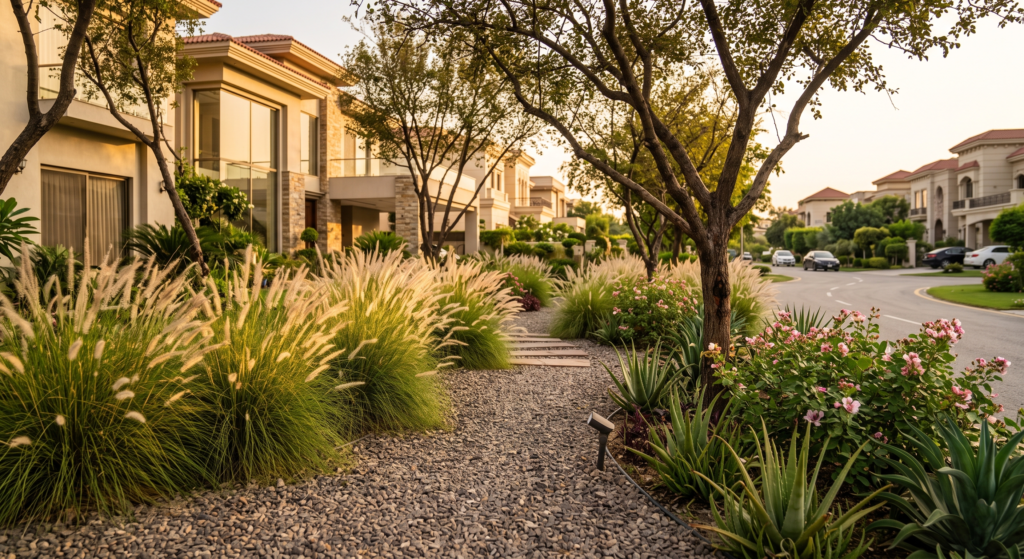
- Coordinating with hardscape tones: Seasonal flower color should complement, not clash with, existing paving, wall, or structural material tones already established in your hardscape.
- Working around permanent softscape structure: Trees, shrubs, and perennial plantings provide the year-round framework that seasonal color fills in around, rather than replacing.
- Planning for seasonal transition: A well-designed scheme accounts for how beds will look and be replanted as one season’s flowering window ends and the next begins.
⚙️ What We Learned in the Field: On several DHA Lahore properties, coordinating seasonal flower color palettes with existing stone and paver tones rather than treating flower bed color as a completely separate decision has consistently produced a more cohesive, higher-end finished look than seasonal planting chosen in isolation.