Skip to content
Exterior Stone Cladding Pakistan: Top Options Compared
Summary: Exterior stone cladding in Pakistan needs to be selected for climate performance heat retention, monsoon moisture resistance, and UV stability not just visual appeal, and locally quarried options like Chakwal stone often perform as well as imported alternatives at a lower cost. Choosing between veneer and full-thickness stone also significantly affects installation method and total project cost.
Exterior Stone Cladding Pakistan Homes Actually Need
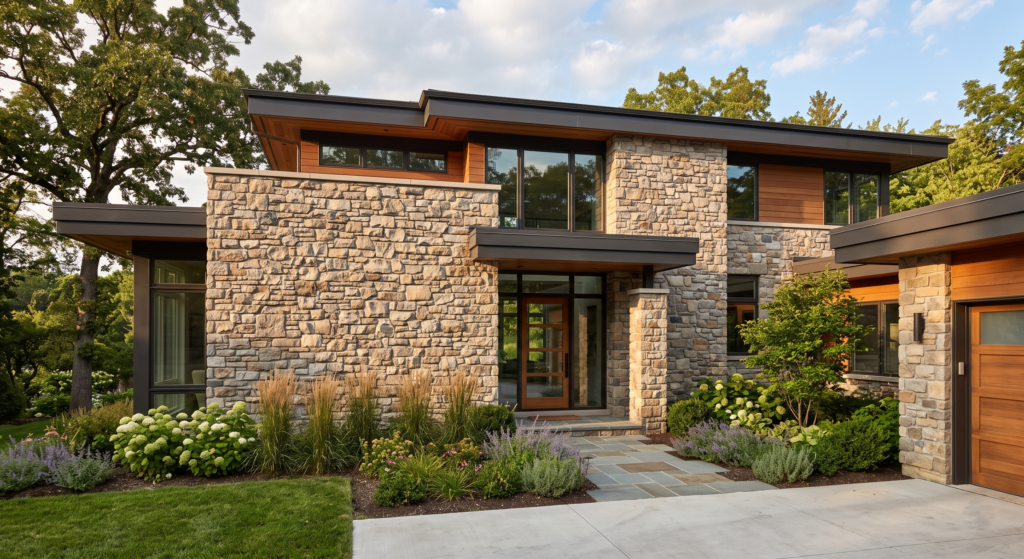
Exterior stone cladding in Pakistan has become one of the most requested facade upgrades we see across residential projects and one of the most frequently mis-specified, when homeowners choose a stone based purely on showroom appearance rather than how it performs on an actual exterior wall.
At Design & Concept Studio, our Hard-Landscape work has consistently reinforced that exterior stone cladding in Pakistan needs to withstand direct summer heat, monsoon moisture, and years of UV exposure conditions that vary meaningfully by material, thickness, and finish.
This guide compares the top exterior stone cladding options available in Pakistan, including a genuinely underused local material, so you can choose based on performance as well as look.
Natural Stone Options for Exterior Stone Cladding in Pakistan
Summary: Sandstone, granite, limestone, marble, and locally quarried Chakwal stone are the primary natural stone options used for exterior stone cladding in Pakistan, each with different heat, moisture, and durability characteristics. Matching the stone to your wall’s sun exposure and local climate matters more than matching it to a showroom sample alone.
Chakwal Stone
A locally quarried Pakistani stone widely used specifically for exterior wall cladding, valued for its natural texture, strong regional availability, and generally lower cost than imported alternatives an option surprisingly underrepresented in most exterior stone cladding guides for Pakistan.
Sandstone
Offers a warm, textured look with moderate heat retention, but its porous structure means exterior stone cladding using sandstone needs proper sealing to resist monsoon moisture absorption and staining.
Granite
Extremely dense and durable, strongly resistant to weathering and staining, making it one of the more climate-resilient exterior stone cladding options in Pakistan though darker granite tones retain more heat on sun-facing facades.
Limestone
A refined, uniform-looking option for exterior stone cladding, but more porous than granite, requiring careful sealing in Pakistan’s humid and monsoon-exposed regions to prevent long-term surface erosion.
Marble
Visually premium, but generally better suited to accent cladding than full exterior stone cladding coverage in Pakistan, given its greater susceptibility to staining and etching under sustained outdoor exposure.
💡 Our Experience: On several DHA and Bahria Town facade projects, we’ve recommended Chakwal stone as a primary exterior stone cladding option specifically for its proven regional weather performance and cost efficiency it’s a material with a genuine local track record, not just an imported trend.
Veneer vs. Full-Thickness Stone: A Key Distinction for Exterior Stone Cladding
Summary: Exterior stone cladding in Pakistan can be installed as thin veneer or full-thickness stone, and this choice significantly affects weight, structural consideration, installation method, and cost. Veneer is lighter and generally more cost-effective; full-thickness stone offers a more substantial, traditional facade appearance.
- Veneer stone cladding — a thin-cut layer of natural or manufactured stone, typically adhesive-set, lighter in weight, and generally faster and less costly to install.
- Full-thickness stone cladding — solid stone units, typically mortar-set, offering more structural mass and a more traditional facade appearance, but requiring greater structural consideration for wall load-bearing capacity.
⚠️ Common Client Mistake: Homeowners frequently compare a veneer stone cladding quote against a full-thickness stone quote as if they’re the same product at different prices. They’re structurally and visually different products always confirm which type you’re being quoted before comparing exterior stone cladding proposals.
Climate Performance: What Exterior Stone Cladding in Pakistan Needs to Survive
Summary: Exterior stone cladding in Pakistan has to withstand intense summer heat, monsoon moisture exposure, and sustained UV without fading, staining, or surface degradation. The same climate-performance logic that applies to hardscape paving, covered in our durable hardscape materials guide, applies to vertical facade cladding as well.
- Heat resistance — darker, denser stone retains more heat on direct sun-facing walls, which can affect nearby seating areas and window comfort, not just the stone itself.
- Moisture resistance — porous stones need proper sealing to resist monsoon-season water absorption and staining.
- UV resistance — sustained sun exposure can fade certain stone finishes over years; denser, naturally UV-stable stones hold color better long-term.
- Installation waterproofing — proper waterproofing behind the cladding layer prevents moisture infiltration into the wall structure itself, regardless of which stone is chosen.
🛠️ Professional Tip: For exterior stone cladding on a west- or south-facing wall in Pakistan’s climate, prioritize lighter-toned or naturally heat-resistant stone Chakwal stone and lighter granite tones both perform well here compared to dark, dense imported stones that can significantly heat up in direct afternoon sun.
Installation Method and Maintenance for Exterior Stone Cladding
Summary: Exterior stone cladding installation in Pakistan generally uses either adhesive-set veneer or mortar-set full stone, with proper waterproofing and joint sealing critical to long-term durability regardless of method. Ongoing maintenance is minimal but not zero joint and sealant condition should be checked periodically.
- Wall Surface Preparation — ensuring a clean, structurally sound base surface before cladding installation.
- Waterproofing Layer — applied before stone installation to prevent moisture infiltration into the wall structure.
- Stone Installation — adhesive-set for veneer, mortar-set for full-thickness stone, following the manufacturer or stone-specific installation requirements.
- Joint Sealing and Finishing — sealing joints and, where needed, applying a stone sealant to manage moisture absorption.
⚙️ What We Learned in the Field: On exterior stone cladding projects where waterproofing was skipped or under-applied behind the stone layer, we’ve seen moisture-related staining and efflorescence develop within a year or two a problem that traces back to installation prep, not the stone material itself.
Exterior Stone Cladding Cost in Pakistan: What We Can and Can’t Tell You
Summary: Exterior stone cladding cost in Pakistan varies by material tier, installation method, and wall preparation needs, but reliable, current, cladding-specific PKR-per-square-foot figures weren’t confidently available at the time of writing. Rather than publish a fabricated price list, this section positions materials by relative cost tier.
| Material | Relative Cost Tier | Notes |
|---|---|---|
| Chakwal Stone | Economy to Mid-Range | Strong regional availability, proven local weather performance |
| Sandstone | Mid-Range | Requires sealing for moisture resistance |
| Granite | Mid-Range to Premium | High durability, consider tone for heat retention |
| Limestone | Mid-Range | Requires sealing for moisture resistance |
| Marble | Premium | Better suited to accent cladding than full coverage |
| Veneer (any material) | Generally lower cost than full-thickness | Lighter weight, faster installation |
⚠️ Common Client Mistake: Comparing an exterior stone cladding quote purely on a per-square-foot number without confirming whether it includes waterproofing, wall preparation, and joint sealing these steps are what determine whether the cladding survives Pakistan’s climate long-term, not just the visible stone price.