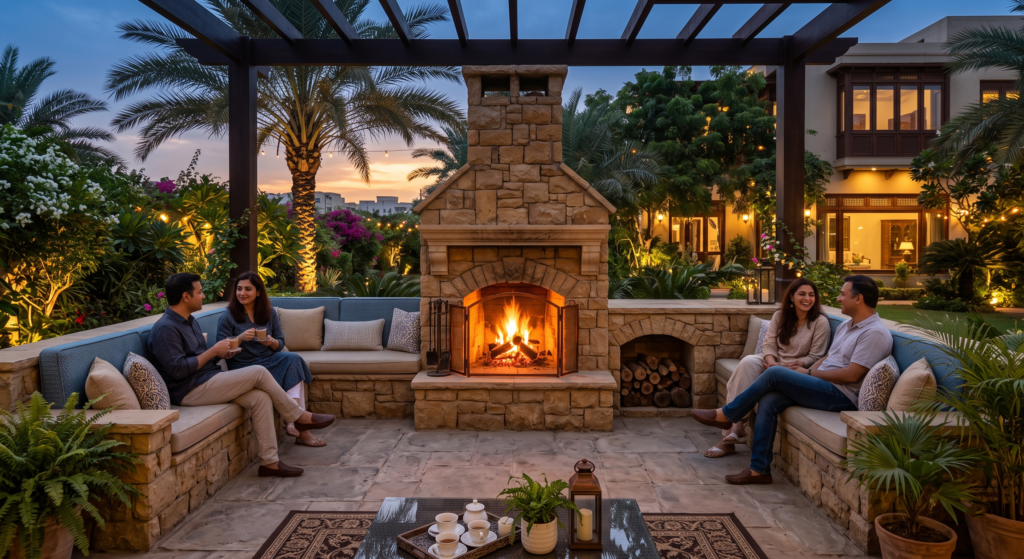
Outdoor Fireplace & Fire Pit Construction in Karachi
Summary: Outdoor fireplace construction in Karachi requires heat-resistant masonry materials, correct ventilation or chimney design, and safe clearance from structures and seating treating it as decorative masonry rather than a functional heat source is the most common source of failure. Gas fire pit installations additionally require licensed gas-fitting work alongside design and construction.
More Than a Decorative Feature
An outdoor fireplace or fire pit changes how a backyard or patio actually gets used extending outdoor evenings well past sunset, even during Karachi’s cooler winter months. But it’s a functional heat structure first, and a design feature second.
At Design & Concept Studio, our Hard-Landscape work across DHA City Karachi has consistently reinforced one principle: an outdoor fireplace or fire pit needs to be engineered for heat, smoke, and safety before it’s designed for appearance. A beautiful stone surround built with the wrong materials or without proper ventilation becomes a liability, not a feature.
This guide covers what actually goes into safe, functional outdoor fireplace and fire pit construction and where to draw the line between what a landscape design and construction team should handle versus what needs a licensed gas-fitting professional.
Wood-Burning vs. Gas: Choosing the Right Fuel Type
Summary: Wood-burning fireplaces and fire pits are generally simpler to construct and maintain, while gas options offer more convenience but require licensed gas line installation and connection approval. The right choice depends on your maintenance preference, safety comfort level, and whether you’re prepared for the additional regulatory step gas installations involve.
Wood-Burning
Simpler construction, no fuel line work required, but needs proper chimney or ventilation design to manage smoke, and regular ash cleanup as ongoing maintenance.
Gas
More convenient day-to-day (instant start, no ash cleanup, more controllable flame), but requires a certified gas-fitting professional for line installation and connection a step separate from the masonry and structural design work.
⚠️ Common Client Mistake: Property owners sometimes assume a gas fire feature is simpler to install than wood-burning because there’s no visible fuel storage or chimney. In practice, gas installations involve regulated fuel line work that should never be handled outside a licensed gas-fitting professional’s scope, regardless of how the finished structure looks.
What Goes Into Safe, Functional Construction
Summary: Heat-resistant materials, proper structural footing, and ventilation or smoke management are the three technical fundamentals of outdoor fireplace and fire pit construction, and skipping any one of them creates a real safety or usability problem, not just a cosmetic one. This is the same “engineering first” principle we apply across all Hard-Landscape work.
Heat-Resistant Materials
Not all stone, brick, or masonry material is rated for direct, sustained heat exposure material selection for the firebox and immediate surround needs to specifically account for heat tolerance, distinct from material chosen for the rest of a patio or seating area.
Structural Footing
A permanent fireplace or built-in fire pit is a masonry structure with real weight and needs proper foundation footing, similar in principle to any other hardscape structure covered in our hardscape drainage guide.
Ventilation and Smoke Management
Wood-burning fireplaces need chimney or flue design that actually draws smoke away from seating areas rather than back toward them a common failure point in poorly designed builds.
Safe Clearance from Structures
Distance from boundary walls, seating areas, overhead structures like pergolas, and the main house needs to account for heat radiation and ember risk, not just aesthetic spacing.
💡 Our Experience: On patio and outdoor living projects across DHA City Karachi, we’ve consistently prioritized clearance planning between fire features and adjacent pergola or seating structures early in the design phase retrofitting safe clearance after a structure is already built is far more disruptive than planning for it from the start.
Does an Outdoor Fireplace Need Society Approval?
Summary: Permanent outdoor fireplace and fire pit structures are generally treated the same way as other structural hardscape elements when it comes to housing society approval, meaning confirmation with your Design or Estate Wing is worth doing before construction begins. This follows the same principle covered in our dedicated hardscape permits guide.
- Permanent masonry structures are more likely to fall under the same review process as other structural hardscape additions.
- Gas connections specifically may involve additional utility-related approval, separate from the structural review.
- Confirm directly with your society’s Estate or Design Wing exact requirements vary and shouldn’t be assumed based on a general guide.
🛠️ Professional Tip: Before finalizing your fireplace or fire pit design, ask the same question we recommend for any structural hardscape work: has this been confirmed against your specific society’s current bylaws? It’s a five-minute question that avoids a much larger problem later.
Planning Your Outdoor Fireplace Project
Summary: A well-planned outdoor fireplace or fire pit project moves through fuel type decision, site and clearance assessment, material selection, and for gas installations coordinated professional gas-fitting work, integrated into your overall outdoor living space design. Treating it as a standalone add-on rather than part of the broader patio design often leads to awkward placement or clearance issues later.
- Decide Fuel Type: Wood-burning or gas, based on maintenance preference and site conditions.
- Site and Clearance Assessment: Evaluating distance from structures, seating, and boundary lines.
- Material Selection: Heat-resistant masonry matched to your broader hardscape material palette.
- Structural Construction: Footing, firebox, and surround construction.
- Gas Line Installation (if applicable): Completed by a licensed gas-fitting professional, coordinated alongside the construction timeline.
⚙️ What We Learned in the Field: Integrating a fireplace or fire pit into the same design phase as the surrounding patio and seating layout rather than adding it as an afterthought consistently produces better clearance, sightlines, and usability than retrofitting one into an already-finished outdoor living space.